
Living with a whip-smart dog is a blessing and a curse. My Australian Shepherd, Luna, once figured out how to slide open the child-proof lock on the treat cabinet while I was on a Zoom call. If your dog treats a standard squeaky toy like a personal insult or dismantles indestructible gear in minutes, you know the struggle. You don’t just need a toy; you need a strategy.
In my years working with high-drive breeds and problem-solving prodigies, I’ve learned that the best dog toys for smart dogs aren’t about durability alone. They’re about engagement. A smart dog gets bored fast, and boredom is the architect of destruction. The goal is mental exhaustion, which often tires them out faster than a five-mile run.
Why Tough Isn’t Enough
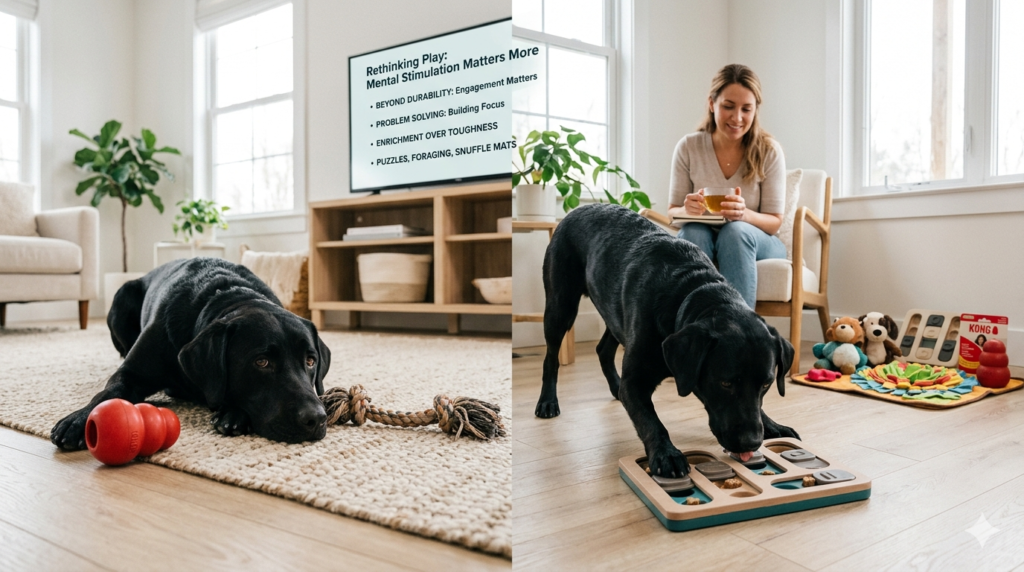
Walk into any pet store, and you’ll see aisles of rubber bones marketed as tough. For a smart dog, toughness is irrelevant if the toy doesn’t require thought. I’ve seen Border Collies ignore heavy-duty chew toys entirely, only to shred a couch cushion because it was more interesting.
Smart dogs need puzzle toys for dogs and interactive dog toys that force them to work for a reward. The key is matching the toy to your dog’s specific type of intelligence. Some are manipulators (paws and nose), some are strategists (sequence solvers), and others are scent detectives.
Puzzle Toys: Level Up or Go Home
If you’re buying a beginner-level puzzle for a genius dog, you’re wasting money. They’ll solve it in thirty seconds and look at you like, “What’s next?” I recommend the Nina Otto son by Outward Hound series, but skip Level 1. Start with Level 2 or 3. The Tornado or Casino puzzles require sliding, lifting, and rotating mechanisms.
One client’s Milionis mastered the Casino in a week, so we had to start taping certain compartments to increase difficulty. That’s the trick: modify the game. Use painter’s tape to block easy access or hide the puzzle under a towel so they have to use scent first.
Pro tip: Smart dogs can get frustrated. If a puzzle is too hard, they might flip it over or chew the pieces. Always supervise the first few sessions. If they struggle, help them once to show the mechanism, then let them figure it out. You’re teaching them how to learn, not just feeding them.
Dispensing Toys with a Twist
The Kong Classic is a staple, but how you use it matters. For a smart dog, a loosely stuffed Kong is a two-minute snack. I teach owners to layer and freeze. Put a plug of peanut butter or yogurt at the bottom, add kibble, pour in bone broth, and freeze it solid. This turns a simple chew into a 20-minute extraction mission.
For dogs who prefer batting and chasing over chewing, the Kong Wobbler or West Paw Toppl are excellent. The Toppl is a community favorite because it’s easier to clean and you can interlock two sizes to create a harder challenge. I’ve found that herding breeds love the unpredictability of the Wobbler; it taps into their instinct to control movement.
Scent Work: The Underrated Brain Burner
Never underestimate nose work. Even the smartest dogs can’t outthink their nose. Snuffle mats are great, but some clever dogs just flip them over to dump the treats. If your dog does this, try a snuffle ball or hide treats inside a rolled-up towel tied in a knot.
For a real challenge, I use the muffin tin game. Place treats in a muffin tin and cover each cup with a tennis ball. The dog has to remove the balls to get the food. It sounds simple, but it requires fine motor control and persistence. I’ve seen dogs try to bite the balls before realizing they need to nudge them out.
DIY Enrichment: Sometimes the Box is Better
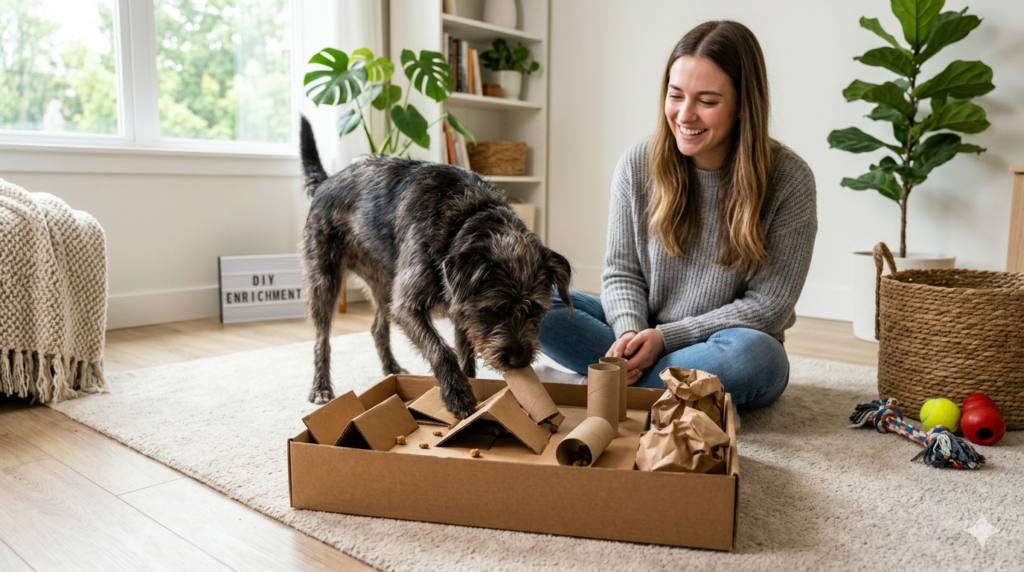
Here’s a secret from the field: some of the best enrichment is free. Smart dogs love novelty. Save your cardboard boxes, egg cartons, and paper towel rolls. Create a destruction box by filling a cardboard box with crumpled paper and hidden treats. Let your dog shred it. It satisfies their need to dismantle things in a controlled way. Just ensure they aren’t eating the cardboard.
Safety, Ethics, and Real-World Limitations
Let’s talk safety. Smart dogs are escape artists and engineers. If a toy has small plastic parts, a determined dog will pry them off and swallow them. Always inspect toys for wear. No toy is truly indestructible for a dog with high prey drive and problem-solving skills. Also, toys aren’t a substitute for you. Mental stimulation for dogs is most effective when paired with interaction. A flirt pole session where you teach wait and drop builds impulse control alongside physical exercise. Don’t just hand over a puzzle and walk away; use toys to strengthen your bond.
Rotation is critical. If all toys are available 24/7, they become background noise. I keep a toy library and rotate three or four items every few days. When the Topple reappears after a week, it’s exciting again. Finally, watch for over-stimulation. Some smart dogs, especially herding breeds, can get hyper-focused and stressed by puzzles. If your dog starts whining, pacing, or snapping at the toy, it’s too frustrating. Dial back the difficulty. Enrichment should build confidence, not anxiety.
The Bottom Line
Finding the best dog toys for smart dogs is about understanding your dog’s unique brain. It’s a mix of high-quality puzzles, strategic dispensing toys, scent games, and plenty of DIY creativity. Observe what makes your dog’s tail wag and ears perk up. Is it the click of a slider? The wobble of a feeder? The hunt?
Invest in toys that challenge them, rotate them to keep things fresh, and always prioritize safety. A mentally engaged dog is a happy dog and a lot less likely to reorganize your living room while you’re at work.
FAQs
Q: How long should a smart dog play with a puzzle toy?
A: Aim for 10 to 20 minutes per session. Mental work is exhausting. If the session drags on too long, your dog may lose interest or get frustrated. Short, successful bursts are better.
Q: My dog destroys every toy. Are there truly indestructible options?
A: For extreme destroyers, look for solid rubber toys like the black Kong Extreme or Doughnuts rings. However, for smart dogs, the goal is mental engagement, not just chewing. Supervision is non-negotiable; if they start breaking pieces off, remove the toy immediately.
Q: Can puzzle toys replace walks?
A: No. Physical exercise and mental stimulation serve different needs. A smart dog still needs to burn physical energy and experience the world through sniffing walks. Use puzzles to complement exercise, especially on rainy days or for cooldowns.
Q: How do I stop my dog from flipping over puzzle toys?
A: This is common with clever dogs. Try placing the puzzle on a rubber mat for grip, bolting it to a board, or holding it steady initially. You can also teach a gentle cue, rewarding them only when they use their nose or paws without flipping.
Q: Are expensive toys worth it for smart dogs?
A: Sometimes. Brands like Nina Otto son offer complex mechanisms that cheap knockoffs can’t replicate. However, DIY options like box searches or towel rolls can be just as effective. Mix high-quality purchases with free homemade games for the best results.