
I still remember the night I brought home my first rescue kitten, a six-week-old tuxedo named Barnaby. I thought I had everything figured out. I had the bowls, the litter box, and a fluffy bed. But within 24 hours, Barnaby had scaled the living room curtains, gotten his tiny paw stuck in a cardboard box, and taught me that my idea of prepared was woefully inadequate. Over the years, I’ve fostered and owned enough cats to know that bringing a new kitten home is equal parts magic and absolute chaos. Kittens aren’t just miniature adult cats; they are highly active, rapidly growing creatures with very specific developmental needs. If you are preparing to bring a fur ball into your life, I’ve put together this guide of essential kitten care tips based on real-world trial, error, and veterinary best practices.
Kitten-Proofing Your Home (The Reality Check)
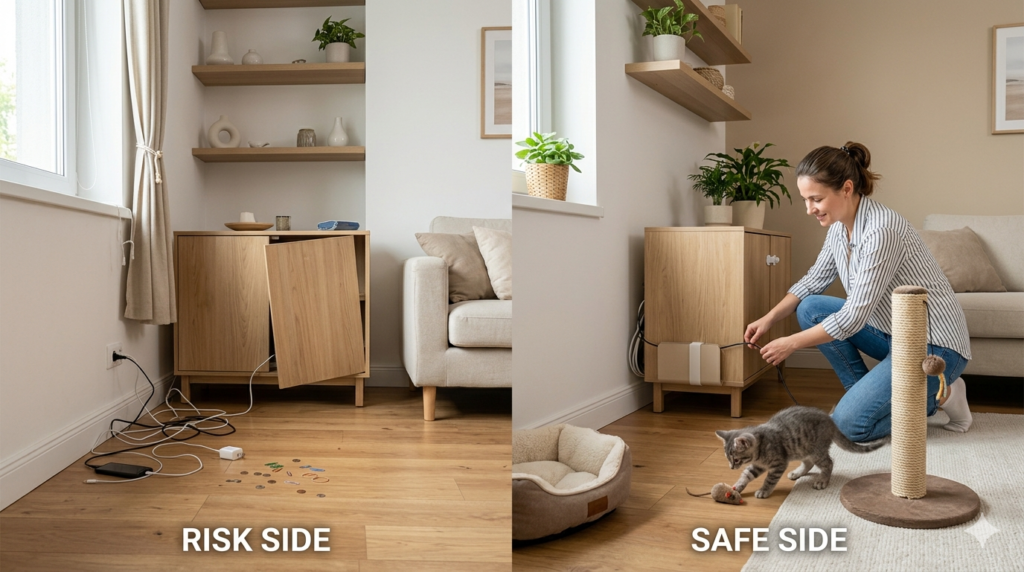
Before your kitten’s paws ever touch your floor, you have to look at your house from ankle height. We all know about keeping the toilet lid down and hiding electrical cords, but there are a few hidden dangers that catch new owners off guard.
The Lily Trap: I cannot stress this enough lilies are lethally toxic to cats. Even a tiny sip of the water from a lily vase can cause acute kidney failure. If you have houseplants, check the ASPCA’s toxic plants list immediately. Poshos, aloe Vera, and peace lilies (which aren’t true lilies but still irritating) are common household culprits.
The “String” Danger: Kittens are obsessed with string, thread, and rubber bands. If swallowed, a linear foreign body can bunch up their intestines like an accordion, requiring emergency surgery. Keep your sewing kits, hair ties, and plastic bags completely out of reach.
Feeding a Growing Kitten
Your kitten needs serious fuel. They are burning calories just by existing, growing, and doing parkour off your sofa at 3 AM.
First, check your cat food bag for an AAFCO statement (the Association of American Feed Control Officials). It should say the food provides complete and balanced nutrition for growth or for kittens. Adult maintenance food simply doesn’t have the protein, fat, and calcium levels a growing kitten needs.
Wet vs. Dry: Personally, I prefer a diet rich in high-quality wet food. Cats have a notoriously low thirst drive, and feeding wet food helps keep their kidneys and urinary tract healthy down the line. If you’re transitioning a kitten to a new food, do it slowly over 5 to 7 days to avoid a digestive disaster in the litter box. Mix a little of the new food with the old, gradually increasing the ratio.
Pro Tip: If your kitten is a picky eater, warm the wet food in the microwave for about 5 seconds. It mimics the body temperature of prey and makes the food smell much more enticing.
Veterinary Care and Vaccines
Let’s be honest: veterinary care right now is expensive. Wait times at clinics are longer due to a nationwide vet shortage, but you cannot put off your kitten’s first appointment.
When you get a new kitten, they should see a vet within the first 48 hours. Your vet will likely start the FVRCP vaccine series (protecting against feline distemper, calicivirus, and rhinotracheitis) around 6 to 8 weeks of age, followed by boosters every 3 to 4 weeks until they are about 16 weeks old. Rabies is usually administered at 12 weeks.
Microchipping: Please, microchip your cat. Even if you plan to keep them strictly indoors, a scared kitten can bolt out the door faster than you can blink. A microchip is cheap, usually done during a routine visit, and dramatically increases the odds of a lost cat being returned home.
Pet Insurance: If you can afford it, sign up for pet insurance while the kitten is young and healthy. Pre-existing conditions are almost never covered, so getting insured on day one can save you thousands if your kitten swallows a rubber band or breaks a leg falling off a shelf.
Litter Box Training: The Easy and the Hard
The good news? Kittens are hardwired to use a litter box. Usually, all you have to do is place them in the box after a meal or a nap, and their instincts take over. The bad news? Their instincts don’t always translate to perfect accuracy. For a kitten under 8 weeks old, I recommend using non-clumping clay or paper litter.
Very young kittens are basically tiny vacuum cleaners they explore the world with their mouths. If they ingest modern clumping litter, it can expand in their stomachs and cause serious blockages. As a general rule, keep the box in a quiet, low-traffic area, and avoid scented litters. Cats have incredibly sensitive noses; what smells like fresh linen to you smells like a chemical assault to a kitten.
Socialization and Setting Boundaries
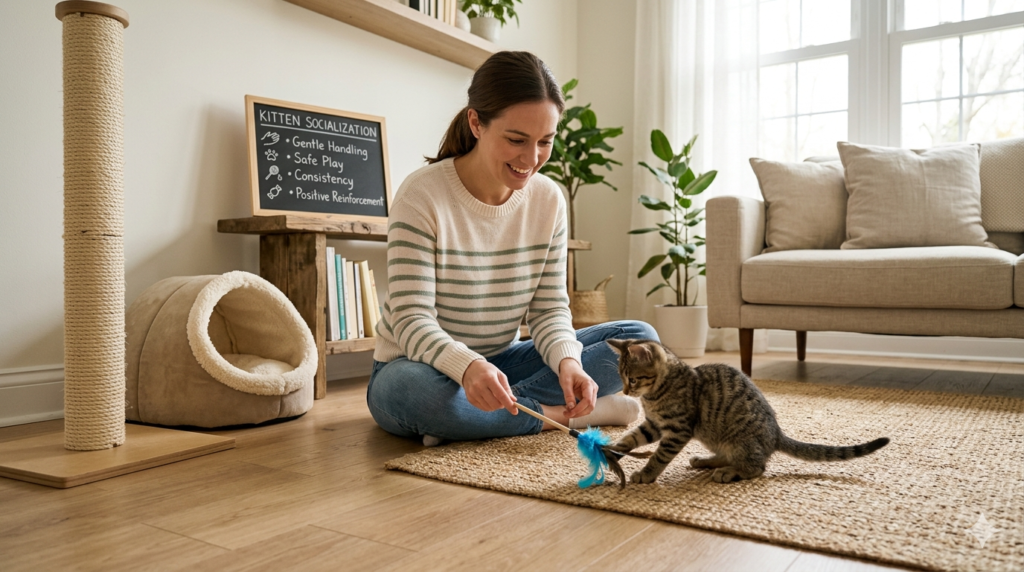
There is a golden window for feline socialization, peaking between 2 and 7 weeks of age, though it remains highly effective up to 14 weeks. This is the time to gently introduce your kitten to new experiences. Get them used to having their paws touched so nail trimming isn’t a wrestling match later. Let them hear the vacuum cleaner from a safe distance. Invite friends over so they get used to different voices and strangers.
The “Hands Are Not Toys” Rule: This is the most critical behavioral tip I can give you. It is incredibly tempting to wiggle your fingers under the blankets to make your kitten pounce. Don’t do it. You are teaching them that human skin is acceptable prey. When Barnaby was eight months old and 10 pounds, he didn’t understand why my hands were no longer fun to bite. It was a tough lesson to unlearn. Redirect their hunting energy to wand toys, kicker pillows, or laser pointers (always end laser play with a physical toy they can catch to avoid frustration).
The Long-Term Commitment
Owning a kitten is a 15 to 20-year commitment. They will grow out of the chaotic kitten phase into dignified adults, provided you give them the right foundation. It requires patience, a bit of money, and a willingness to compromise your furniture, but I promise you the bond you build with a cat you raise from kittenhood is one of the most rewarding experiences in life.
FAQs
Q: How often should I feed my kitten?
A: Kittens have tiny stomachs and high energy needs. Feed them 3 to 4 small meals a day until they are about 6 months old. After that, you can transition to twice-daily feedings.
Q: Can I give my kitten cow’s milk?
A: No. Despite the cartoon trope, most cats are lactose intolerant. Cow’s milk will likely give your kitten severe diarrhea and an upset stomach. Stick to fresh water or specific kitten milk formulas if they are very young.
Q: When should I spay or neuter my kitten?
A: Veterinarians generally recommend spaying or neutering around 4 to 6 months of age, before they reach sexual maturity. Some shelters perform pediatric spay/neuters at 2 months (or 2 pounds), which is also considered safe.
Q: Why is my kitten biting and scratching me?
A: Kittens explore the world with their mouths and claws. If they are biting you, they are likely either teething, overstimulated, or treating you like a toy. Immediately stop playing, walk away, and redirect them to an appropriate toy. Never use your hands to wrestle with them.