
Let’s be honest cats are masters of self-care. They lick themselves into sleek perfection, nap strategically in sunbeams, and generally act like they’ve got it all under control. But even the most fastidious feline needs a little help from their human now and then. Whether you’ve got a fluffy Persian that sheds like a blizzard or a sleek Siamese who tolerates brushing with mild disdain, learning how to groom your cat at home is one of the kindest things you can do for them.
I’ve been grooming cats professionally and as a devoted pet parent for over 12 years. I’ve seen it all: the hissing drama queens, the zen-like lap loungers, the ones who treat nail trims like mortal combat. And through trial, error, and a whole lot of tuna bribes, I’ve learned that most cats can learn to tolerate even enjoy grooming at home. It just takes patience, the right tools, and a solid game plan.
Why Bother Grooming Your Cat at Home?
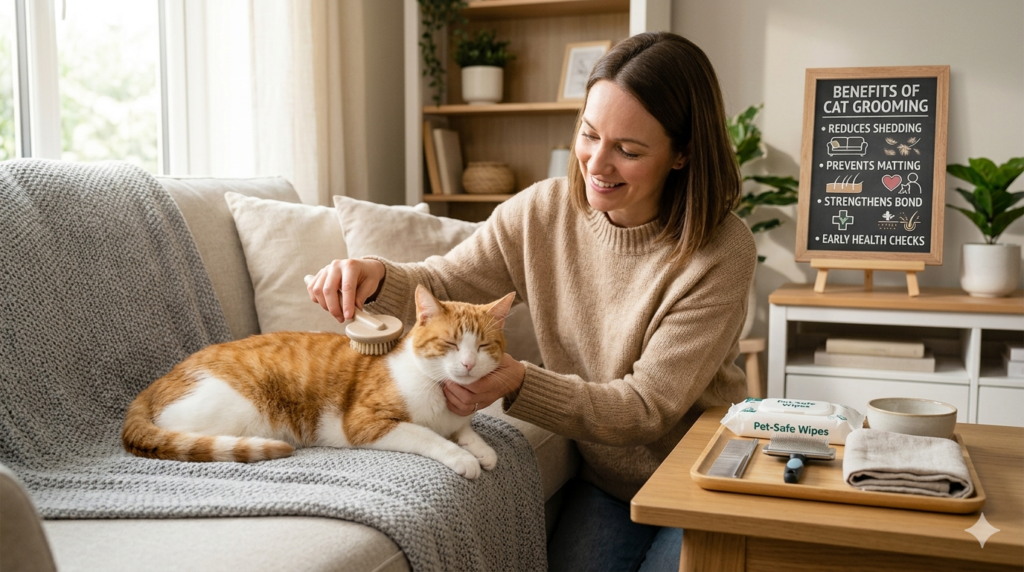
First off, let’s bust a myth: indoor cats don’t need less grooming. In fact, without access to natural elements (like wind, rain, or outdoor surfaces to rub against), indoor cats can develop more matting, dander buildup, and even skin issues. Regular grooming helps:
- Prevent painful mats and hairballs
- Reduce shedding around the house (hello, black sweaters!)
- Spot early signs of skin infections, lumps, or parasites
- Strengthen your bond through gentle, consistent touch
Plus, professional grooming sessions can run $50–$100+ per visit. Doing it yourself? Practically free, aside from a few smart tool investments.
Step-by-Step: How to Groom Your Cat Without Losing Your Mind
1. Start Slow Like, Really Slow
If your cat hasn’t been groomed since kittenhood, don’t dive in with clippers and a slicker brush on day one. Begin by simply petting them in areas you’ll eventually groom belly, legs, tail base. Offer treats after each session. Gradually introduce the brush: let them sniff it, tap it gently against their fur, reward calm behavior. Five minutes max to start. Build up slowly.
Pro tip: Do this after meals or during sleepy hours. A full belly and drowsy brain = maximum cooperation.
2. Choose the Right Tools (No, Not Human Brushes!)
Cats aren’t dogs. Their skin is thinner, more sensitive. Using the wrong brush can hurt or worse, make them hate grooming forever.
- Slicker brush: Best for medium to long-haired cats. Removes loose fur and prevents tangles.
- Fine-toothed comb: Essential for checking mats near the armpits, behind ears, and under the chin.
- Rubber grooming glove: Great for short-haired cats and nervous kitties it feels like petting!
- Nail clippers (cat-specific): Guillotine-style or scissor-style. Never use human clippers they crush instead of cut.
- Cat-safe wipes or waterless shampoo: For spot cleaning paws or rear ends (yes, we’ve all had that moment).
Avoid metal combs with sharp edges. And never, ever bathe your cat unless absolutely necessary (more on that later).
3. Brushing: Technique Matters More Than Frequency
Brush in the direction of hair growth. Start at the head, move toward the tail. Use light pressure imagine you’re brushing a dandelion puff without breaking it. If you hit a mat? Don’t yank. Hold the base of the mat with one hand to protect the skin, gently tease it apart with your fingers or a wide-tooth comb. If it’s too tight, snip parallel to the skin with blunt-tipped scissors (seriously never point them toward the body).
Long-haired cats? Daily brushing. Short-haired? 2–3 times a week is plenty.
Real-life example: My client’s Maine Coon, Mochi, used to come in every three months with golf-ball-sized mats under her armpits. After teaching her owner to brush just 5 minutes daily? Zero mats in six months. Game-changer.
4. Nail Trimming: Less Trauma, More Treats
Most cats need nail trims every 2–3 weeks. Here’s how to avoid the wrestling match:
- Wrap your cat in a towel burrito-style if they’re squirmy (leave one paw out at a time).
- Press gently on the toe pad to extend the nail.
- Clip only the clear, curved tip avoid the pink quick (it bleeds and hurts).
- Have styptic powder on hand just in case (cornstarch works in a pinch).
Reward immediately after each paw. Even if you only get one nail done? Celebrate it. Next time, you’ll get two.
5. Baths? Only When Necessary
Unless your cat rolled in motor oil or has a medical condition requiring medicated baths, skip the tub. Most cats self-clean efficiently. If you must bathe them:
- Use lukewarm water and cat-specific shampoo (never human products they disrupt pH balance).
- Keep water away from ears and eyes.
- Dry thoroughly with towels (no blow dryers unless your cat is weirdly into it).
Better yet? Try waterless foams or wipes for freshening up between grooms.
Common Mistakes (And How to Avoid Them)
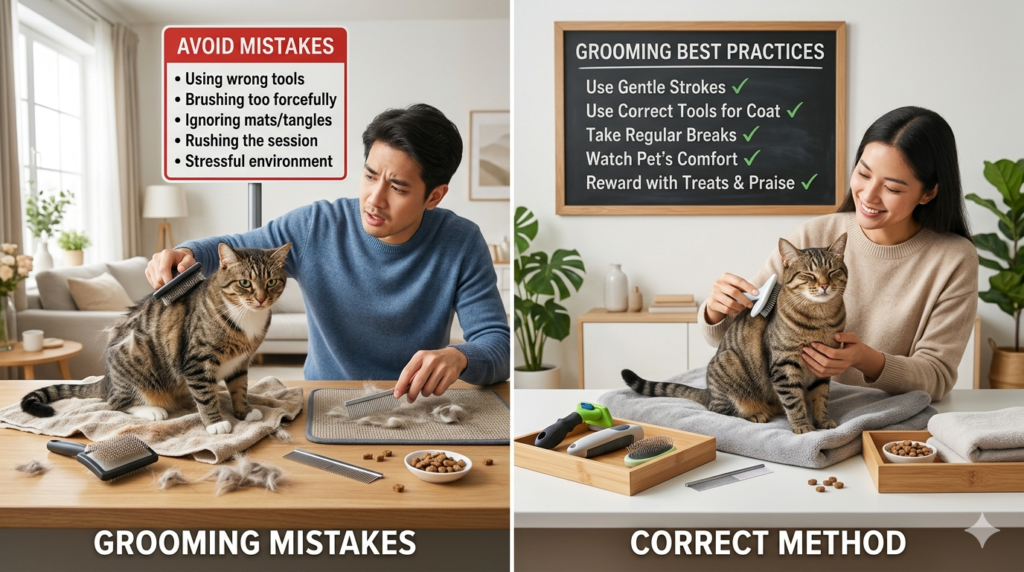
- Rushing the process. Cats sense anxiety. Move slowly, breathe deep, keep sessions short.
- Punishing resistance. Never yell or force. You’ll undo weeks of trust-building.
- Ignoring dental care. Brushing teeth isn’t technically grooming, but oral health affects overall wellness. Start young with finger brushes and enzymatic toothpaste.
- Skipping ear checks. While grooming, peek inside ears. Brown gunk? Could be yeast. Black specks? Possibly mites. Both need vet attention.
When to Call a Pro
Some situations call for expert hands:
- Severe matting close to the skin
- Aggressive behavior that doesn’t improve with desensitization
- Skin lesions, open sores, or unusual lumps found during grooming
- Senior cats with arthritis who find brushing painful
A certified cat groomer (look for Fear Free or ISCCG credentials) can handle these safely—and often teach you techniques to continue at home.
The Emotional Payoff
Beyond clean fur and trimmed claws, grooming builds intimacy. One of my favorite memories? A formerly feral rescue named Olive, who spent her first year hiding under beds. After months of slow, gentle brushing sessions paired with salmon treats, she began climbing onto my lap asking for brush time. That trust? Worth more than any perfectly coiffed coat.
Final Thoughts
Grooming your cat at home isn’t about perfection. It’s about presence. About showing up consistently, kindly, and patiently even when your cat swats the brush away or drapes herself dramatically across the floor like a fallen opera star. With time, most cats not only accept grooming… they lean into it. Literally.
Start small. Celebrate tiny wins. Invest in good tools. And remember you’re not just removing loose fur. You’re preventing discomfort, catching health issues early, and telling your cat, in the quietest, most tactile way possible: I’ve got you.
FAQs: Easy Cat Grooming at Home
Q: How often should I groom my cat?
A: Short-haired: 2–3x/week. Long-haired: Daily. Adjust based on shedding season and individual tolerance.
Q: My cat hates the brush. What now?
A: Try a grooming glove first. Go slower. Use high-value treats. Desensitize over days or weeks not minutes.
Q: Can I use baby shampoo on my cat?
A: No. Always use cat-formulated products. Baby shampoo can dry out their skin and cause irritation.
Q: How do I know if my cat’s nails are too long?
A: If they snag on fabric, click loudly on floors, or curl into the paw pad they’re overdue.
Q: Is it okay to shave my cat in summer?
A: Generally not recommended. Their coat regulates temperature and protects from sunburn. Brush more instead.
Q: What if my cat has mats? Can I cut them out?
A: Only if you can safely slide a comb under the mat. Otherwise, see a groomer or vet cutting too close can injure skin.
—