
I’ve spent the better part of a decade fostering cats, running a small pet-sitting side hustle, and let’s be honest wasting money on scratching posts that collected dust while my couch bore the brunt of feline frustration. So when I say I’ve tested a lot of scratching posts, I mean a lot. Some have been absolute lifesavers. Others? Expensive coat racks.
Here’s the thing most product roundups won’t tell you: the best scratching post depends entirely on your cat. A giant Maine Coon won’t give a second glance at a flimsy 24-inch sisal pole. A timid rescue might be terrified of something that wobbles. But after years of trial, error, and conversations with veterinarians and cat behaviorists, I’ve narrowed down the posts that consistently earn their keep.
Why Scratching Posts Aren’t Optional
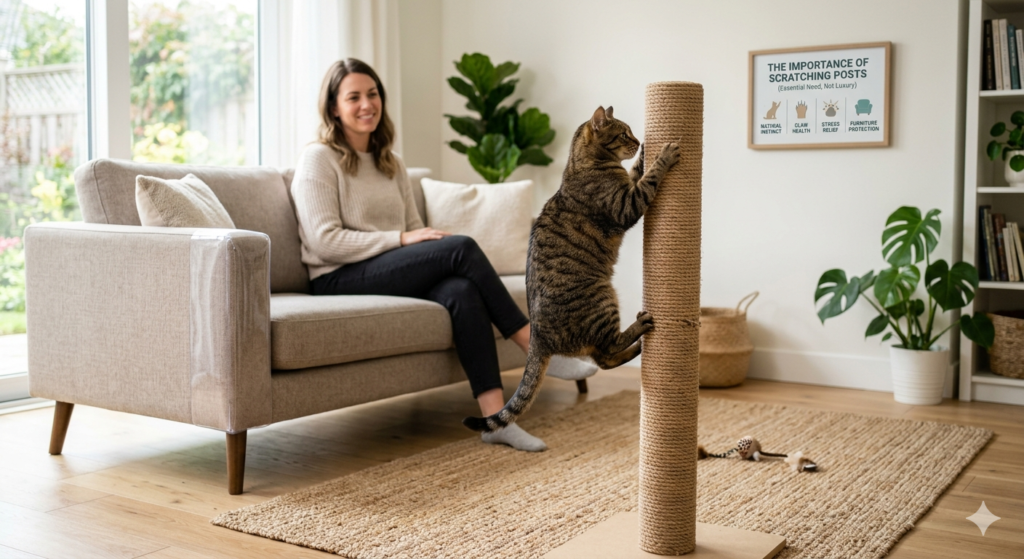
First, a quick reality check. Scratching isn’t a behavioral problem it’s a biological necessity. Cats scratch to shed the outer sheath of their claws, stretch their muscles, and mark territory through scent glands in their paws. Deny them an appropriate outlet, and they’ll find one on their own. Your sofa, door frames, or carpet are all fair game. A good scratching post isn’t a luxury. It’s furniture insurance.
What I Look For (and You Should Too)
Before diving into specific picks, here’s my personal checklist after years of observing what cats actually gravitate toward:
- Stability. If it wobbles even slightly, most cats will abandon it. Cats need to dig in and pull.
- Height. Ideally tall enough for a full-body stretch at least 30–32 inches for adult cats.
- Material texture. Sisal rope and sisal fabric tend to win over carpet-covered posts. Cardboard scratchers are a different category but wildly popular with certain cats.
- Scent neutrality. Some synthetic materials carry chemical odors that repel cats. Natural materials almost always perform better.
With that framework in mind, here are the posts that have earned permanent spots in my home and the homes of cats I’ve cared for.
The SmartyKat Sisal-Wrapped Classic
This is the Honda Civic of scratching posts. Nothing flashy, but it works reliably. At around 32 inches tall with a wide, stable base, it handles most medium-sized cats without tipping. The sisal rope wrapping holds up reasonably well I’ve had one last about 14 months before needing replacement, which is solid for the price point (usually under $25). The downside? It’s basic. No perch on top, no dangling toy. Some cats lose interest once the novelty wears off. But for a no-nonsense first scratching post, it’s hard to beat.
Frisco 32-Inch Cat Scratching Post
Chew’s house brand has quietly become one of my go-to recommendations. The Frisco post is slightly taller than the SmartArt, comes in several colors (matters more to us than to the cat, admittedly), and uses a combination of sisal rope and carpet. My orange tabby foster, Biscuit, claimed this one within about ten minutes of me unboxing it which is unusually fast.
What impressed me most was durability. After nearly two years of aggressive daily use, the sisal was frayed but still functional. The base stayed rock-solid. At roughly $20, it’s arguably the best value option on the market right now.
SmartCat Pioneer Pet Ultimate Scratching Post
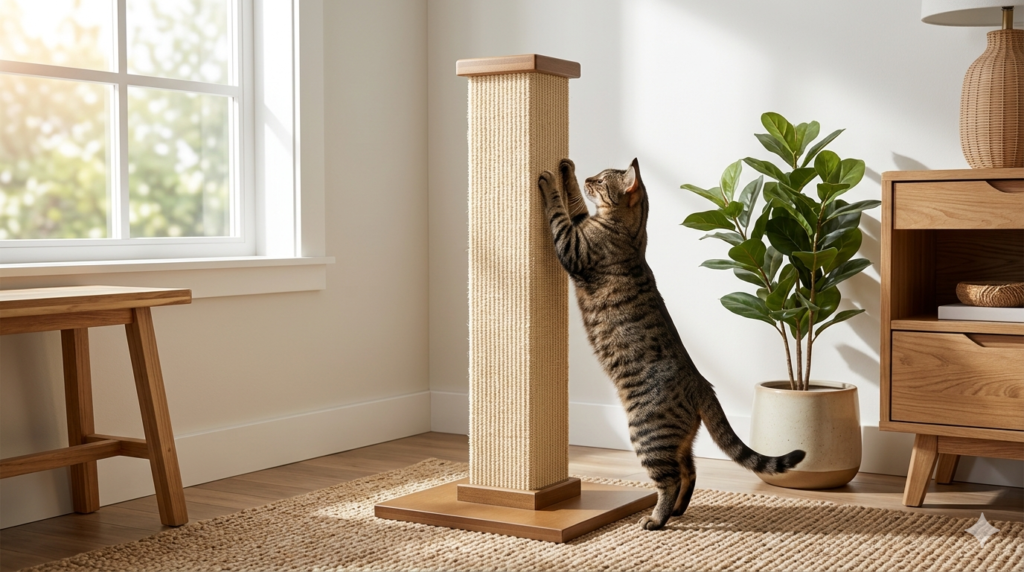
This is the one I recommend to people whose cats have already destroyed two or three cheaper posts. It’s 32 inches of floor-to-ceiling sisal fabric not rope which is a subtle but important distinction. Sisal fabric tends to fray in a way that cats love, and it lasts noticeably longer than wrapped rope. The construction is genuinely sturdy. Solid wood base, no wobble whatsoever.
My neighbor’s 14-pound Bengal mix has been using hers for over three years, and while the fabric shows wear, she still prefers it over anything else in the house. The only real downside is the price. At around $50–60, it’s an investment. But when you factor in longevity, it actually costs less per year than replacing cheaper posts.
The Bergan Turbo Scratcher Cardboard Combo
Okay, this one’s technically a cardboard scratcher, not a traditional post but I’d be doing you a disservice to leave it out. Flat cardboard scratchers appeal to cats who prefer horizontal scratching, and this model includes a ball track toy built in. It’s the only product I’ve seen that consistently converts post refusers. I keep one in every room. They wear out faster than sisal maybe 3–6 months per cardboard insert but replacement pads are cheap, and the engagement level is off the charts.
Catit Vesper High Base
If aesthetics matter to you and you’re willing to spend a bit more, the Vesper line is beautifully designed. The High Base model offers a scratching surface, a cubby cave, and a cushioned perch. It’s modern-looking enough that I don’t feel embarrassed having it in my living room.
Functionally, it works well for cats who like both scratching and vertical lounging. The sisal panels are replaceable, which extends the product’s lifespan considerably. I’d recommend it for multi-cat households where you need a piece that serves multiple purposes.
A Few Honest Caveats
No scratching post is cat-proof. I’ve seen cats ignore the most well-reviewed post in favor of a cardboard box. If your cat isn’t using a new post, try rubbing it with catnip, placing it near their favorite sleeping spot (cats love to scratch right after waking up), or gently guiding their paws to the surface. Location matters enormously putting a post in a back corner of the basement won’t cut it. Also, never punish a cat for scratching the wrong surface. Redirect instead. Positive reinforcement works. Scolding doesn’t.
Final Thoughts
The best scratching post is the one your cat actually uses. Start with something stable, tall, and sisal-wrapped. If that doesn’t work, try cardboard or a different angle literally. And please, invest a little upfront. A $60 post that lasts three years beats a $20 post you replace four times. Your furniture will thank you.
FAQs
Q: How many scratching posts should I have?
A: A good rule of thumb is one per cat, plus one extra. Place them in areas where your cat already spends time.
Q: Why does my cat scratch the couch but not the post I bought?
A: Likely a texture or placement issue. Try moving the post right next to the couch and make sure it’s stable and tall enough for a full stretch.
Q: Are sisal rope or sisal fabric posts better?
A: Fabric generally lasts longer and frays in a more satisfying way for most cats. But individual preference varies some cats prefer rope.
Q: Can I repair a worn-out scratching post?
A: Yes. You can re-wrap sisal rope yourself with a hot glue gun. It’s cheaper than buying a new post and many cats respond positively to the refreshed texture.
Q: At what age should I introduce a scratching post?
A: As early as possible kittens start scratching around four weeks old. The sooner they develop good habits, the less likely they are to target your furniture later.