
Last summer, I drove twelve hours from Austin to Albuquerque with my 60-pound Labrador mix, Cooper, crammed into the back seat alongside a cooler, two duffel bags, and a chew toy he immediately destroyed. By hour three, he’d thrown up on my leather seats. By hour five, I realized I’d forgotten his anxiety medication at home. That trip taught me more about pet travel preparation than any blog post ever could. Since then, I’ve taken Cooper on at least a dozen road trips and two flights.
I’ve also helped friends navigate international pet travel requirements. The difference between a nightmare journey and a smooth one almost always comes down to preparation specifically, having a proper checklist you actually follow. Here’s everything I’ve learned, organized the way I wish someone had laid it out for me before that first disastrous drive.
Before You Leave: The Planning Phase

Start at least two weeks before your trip. Seriously. Some of these steps take time, and rushing them creates exactly the kind of stress you’re trying to avoid.
Visit your vet. This isn’t optional. Get a wellness check and make sure vaccinations are current. If you’re crossing state lines, you’ll likely need a health certificate issued within 10 days of travel. Flying internationally? That timeline stretches to months in some cases countries like Australia and the UK have strict quarantine protocols. Ask your vet about motion sickness remedies and anxiety solutions too. Cooper does well with a mild sedative prescribed by his vet, but some dogs respond better to calming supplements or a Thunders Hirt.
Research your destination. Not every hotel, Airbnb, or campground welcomes pets. I once booked a gorgeous cabin in Colorado only to discover at check-in that they had a 25-pound weight limit for dogs. Read the fine print. Call ahead. Confirm pet policies, deposits, breed restrictions, and any additional fees. Save confirmation emails on your phone.
Update identification. Your pet’s collar tags should have your current phone number. If your pet is microchipped and they should be verify that the registration information is up to date. Microchips are worthless if they link to an old address or disconnected number.
The Essential Packing List
I keep a dedicated pet travel bag in my closet now. It saves me twenty minutes of frantic gathering every time we head out.
Food and water. Bring enough of your pet’s regular food for the entire trip, plus an extra day’s worth. Switching food while traveling is a recipe for digestive disaster. Pack collapsible bowls and a portable water bottle. Tap water in different regions can upset sensitive stomachs, so I usually bring a gallon of water from home for the first day or two.
Medications and health records. Bring physical copies of vaccination records and your vet’s contact information. Pack all medications in their original containers with dosage instructions. I learned this the hard way at a pet-friendly hotel that required proof of rabies vaccination before check-in.
Comfort items. A familiar blanket, a favorite toy, something that smells like home. These small things genuinely reduce anxiety. Cooper has a ratty stuffed duck he’s had since he was a puppy, and it calms him down faster than anything else.
Waste supplies. Poop bags, paper towels, an enzyme-based cleaner for accidents, and a lint roller. You will need the lint roller. Trust me.
Safety gear. A sturdy leash, harness, and carrier or crate appropriate for your pet’s size. For car travel, a crash-tested pet seatbelt or secured crate is far safer than letting your dog roam free. An unsecured pet in a vehicle is a projectile during sudden stops that’s not dramatic, it’s physics.
First aid kit. Bandages, antiseptic wipes, tweezers for ticks, hydrogen peroxide (in case your vet advises inducing vomiting), and any allergy medication your pet might need.
During the Trip: Keeping Everyone Sane
On road trips, stop every two to three hours. Let your pet stretch, sniff around, drink water, and relieve themselves. These breaks matter more than you think they prevent restlessness and reduce the chance of car sickness.
Never leave your pet alone in a parked car. Even on a mild 70°F day, car interiors can reach dangerous temperatures within minutes. This kills pets every year, and it’s entirely preventable.
For air travel, familiarize yourself with airline-specific pet policies well in advance. Cabin allowances, carrier dimensions, breed restrictions, and booking deadlines vary wildly between carriers. Some airlines have seasonal embargoes on pet travel during extreme heat or cold.
Keep feeding light before and during travel. A full stomach plus motion equals misery. Offer small meals and plenty of water instead.
After You Arrive
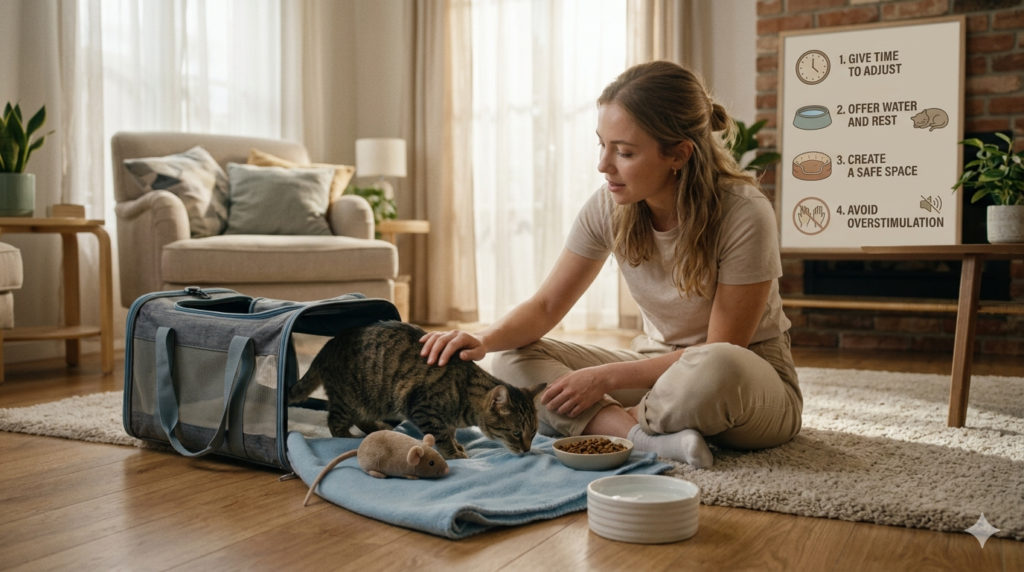
Give your pet time to decompress. New environments are overwhelming unfamiliar smells, sounds, surfaces. Let them explore the room or yard at their own pace. Maintain their regular feeding and walking schedule as closely as possible. Routine is comfort.
Do a quick safety check of your accommodation. Look for toxic plants, unsecured balconies, gaps in fences, or anything a curious pet could get into.
The Honest Truth
Not every pet is a good traveler, and that’s okay. Some dogs, cats, and small animals are genuinely healthier and happier staying home with a trusted pet sitter or at a reputable boarding facility. Recognizing that isn’t failure it’s responsible pet ownership. If your pet shows extreme distress during travel despite preparation and veterinary support, the kindest thing might be to leave them in familiar surroundings.
But for the pets who can handle it or even enjoy it traveling together creates memories you won’t get any other way. Cooper now jumps into the car the moment he sees me grab his travel bag. He knows what it means. Prepare well, stay flexible, and keep your pet’s comfort at the center of every decision. That’s the whole secret, honestly.
FAQs
Q: How far in advance should I prepare for pet travel?
A: At least two weeks for domestic trips. For international travel, start two to three months early due to documentation and quarantine requirements.
Q: Can I give my pet Benadryl for travel anxiety?
A: Some vets recommend it, but never medicate your pet without consulting your veterinarian first. Dosage depends on weight, breed, and health conditions.
Q: What’s the safest way for a dog to ride in a car?
A: A crash-tested harness or a secured crate in the back seat offers the best protection during sudden stops or accidents.
Q: Do cats travel well?
A: Most cats prefer staying home, but some adapt with proper carrier training and gradual exposure. Start with short car rides weeks before the trip.
Q: What documents do I need for flying with a pet?
A: Typically a health certificate, proof of rabies vaccination, and airline-specific forms. Check your airline’s requirements at least a month before departure.
Q: Should I feed my pet before a long car ride?
A: Offer a light meal two to three hours before departure. Avoid feeding during the drive to prevent motion sickness.