
There is a romantic version of the multi-pet household floating around social media. You know the one—cats napping on stacked cushions while dogs play gently in the background, everyone synchronized in perfect domestic bliss. But anyone who has lived in a house with more than one furry resident knows the reality involves far more than just cute photos. It involves a symphony of barks, chirps, food stealing attempts, and the constant negotiation of personal space.
After managing a bustling home with three dogs and two cats over the last decade, I’ve learned that success isn’t about controlling your pets; it’s about curating their environment. When you talk about managing multi-pet homes, the goal isn’t elimination of conflict which is impossible but rather the reduction of stress so everyone can actually breathe.
Designing Your Physical Space for Peace
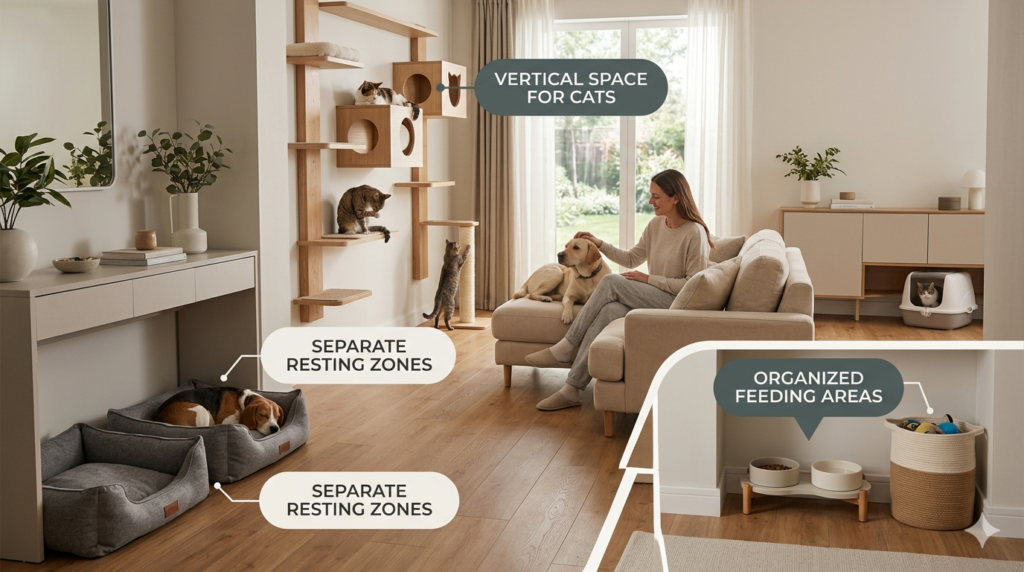
Before bringing a third tail or whisker into the mix, the most critical step often gets skipped: environmental setup. In a single-pet home, you have a dog bed and maybe a scratching post. In a busy house, you need zoning. Think of your home like a shared office. If everyone needs the same printer, frustration builds. For pets, resources are food bowls, water stations, litter boxes, and sleeping spots. A golden rule I stick to is the N+1 rule for litter boxes. If you have three cats, that’s four boxes. Why? Because one might be dirty, another occupied, and a third out for repairs.
Vertical space changes everything. Dogs claim horizontal ground, usually the center of the rug. Cats prefer vertical real estate. By adding cat trees near windows or ensuring high perches, you allow your feline residents to observe the room without being chased down by canine energy. I remember upgrading our living room specifically to include wall-mounted shelves because the tension between our lab and the Persian dropped immediately once she could retreat above head height without feeling trapped.
The Art of Pet Introductions
Let’s be clear: rushing this process is the number one reason people decide their multi-dog or cat-and-dog households simply don’t work. Introducing a new member requires patience that feels counterintuitive. You want the sniff test, but not the face-to-face wrestling match. Start with scent swapping. Swap bedding between animals a few days before they meet. This allows them to investigate the intruder chemically without the pressure of confrontation. One of my friends recently adopted a foster pit bull. Instead of letting him run loose immediately, they kept the existing German Shepherd on a leash across the room while they fed both animals treats. Positive association.
Over time, they worked up to walking in parallel on neutral territory like a park. It took three weeks of slow progression instead of three hours. When you bring a new dog home, never introduce them directly to the cats until the dog is thoroughly bored of the investigation phase. High prey drive breeds require extra vigilance here. Trust-building takes months, not minutes.
Mastering the Daily Routine
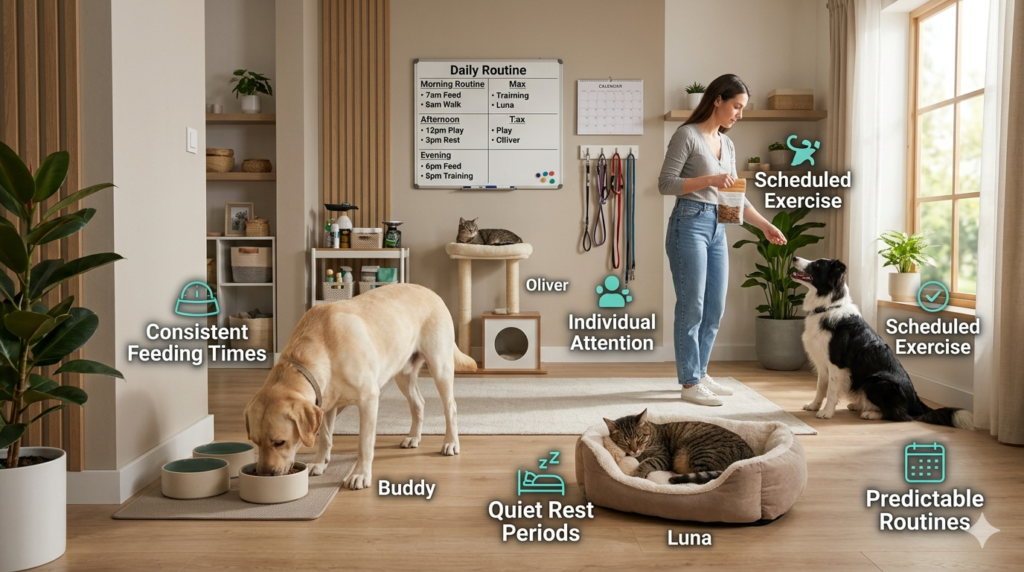
Chaos thrives in unpredictability. Pets thrive on rhythm. If you wake up at 6 AM to feed, walk, and clean, stick to that schedule even if you’re tired. When multiple animals rely on you for basic needs, inconsistency creates anxiety. Anxiety leads to guarding behaviors, which leads to biting or scratching. Feeding time is perhaps the most delicate logistical challenge. Separate spaces are non-negotiable for many households. I’ve seen owners try free-feeding in the same room, resulting in one dog eating all the dry kibble meant for the other.
If you have an aggressive feeder, use baby gates or carry small meals to different rooms. Bathroom breaks also scale in difficulty. With two dogs, that means leashes out the door. Having a dedicated system helps. Using a clip-on leash hook right by the exit prevents fumbling through keys and coats, which keeps both the humans and pets calm. Even small friction points add up.
Reading the Room and Ethical Limits
While this guide aims to make life easier, there are ethical limits to managing a large group of animals. Not every personality fits together. Some dogs are simply too predatory for a quiet kitten, regardless of training. Ignoring red flags because you don’t want to return the pet causes long-term trauma for the animals involved. If you notice constant low-level growling, hiding under furniture, or loss of appetite, pause and reassess. Sometimes pet safety dictates that keeping species apart is the kindest choice. I recall a situation where a resident cat became so stressed he began urinating outside the box after a new puppy arrived.
Despite trying behavior modification, the cat’s quality of life was compromised. He was rehomed to a quiet first-floor apartment. That wasn’t a failure; it was responsible ownership recognizing that the multi-pet dynamic didn’t serve his well-being. Additionally, consider your own capacity. Veterinary bills skyrocket when multiple pets are involved. Preventative care is cheaper than emergency surgery, so prioritize flea prevention, dental checks, and vaccinations for everyone simultaneously. It saves money and prevents diseases from crossing over between species.
Conclusion
A harmonious household with multiple pets is absolutely achievable, but it requires intentional design and daily effort. It stops being about who is the dominant animal and starts being about how well you support each individual’s needs within the group. Whether you’re navigating a chaotic pack of hounds or a standoff between a stubborn chihuahua and a timid rabbit, the core principles remain: secure resources, manage introductions slowly, and respect their boundaries.
It won’t always be picture-perfect. There will be days when the towels are chewed and the trash is spilled. But when you catch your dog resting its head on your cat’s back in the sunbeam later that evening, you’ll know the effort was worth it. Just remember, you are building a community, not just housing units. Treat them like family members with voices of their own, listen to what they need, and manage the logistics accordingly.
FAQs
Q: How do I stop resource guarding in a multi-pet home?
A: Separate feeding areas immediately. Never force an interaction over toys or food. If guarding occurs, consult a certified trainer to desensitize the behavior safely rather than punishing the growl.
Q: Can cats and dogs really live peacefully together?
A: Yes, absolutely, but it depends on their individual temperaments and proper introductions. Many successful homes have cats and dogs that share space, though supervision is necessary until trust is established.
Q: What is the best way to prevent fights during mealtime?
A: Feed pets in separate rooms or crates. Ensure each bowl is far enough away that no other animal can sneak up. Remove food bowls immediately once they finish eating to avoid lingering tension.
Q: How do I know if I have too many pets?
A: If you find yourself unable to provide enough exercise, attention, or medical care to every animal, or if aggression levels increase despite training, you may be at capacity. Listen to the animals’ stress signals.