
I still remember the exact moment I realized my pristine, mid-century modern living room was no longer just mine. My rescue mutt, Barnaby, had just dragged a muddy, slobbery tennis ball directly across my beloved vintage Persian rug. That was my wake-up call. Creating a truly pet-friendly home isn’t about surrendering your aesthetic to a sea of plastic tarps, carpet runners, and wire crates.
It’s about making smart, intentional design choices that keep your furry family members safe and comfortable while preserving your own sanity. Over the years, through trial, error, and a lot of vacuuming, I’ve learned how to blend pet-proofing with beautiful interior design. Here is how you can do the same.
Rethinking Floors and Furniture
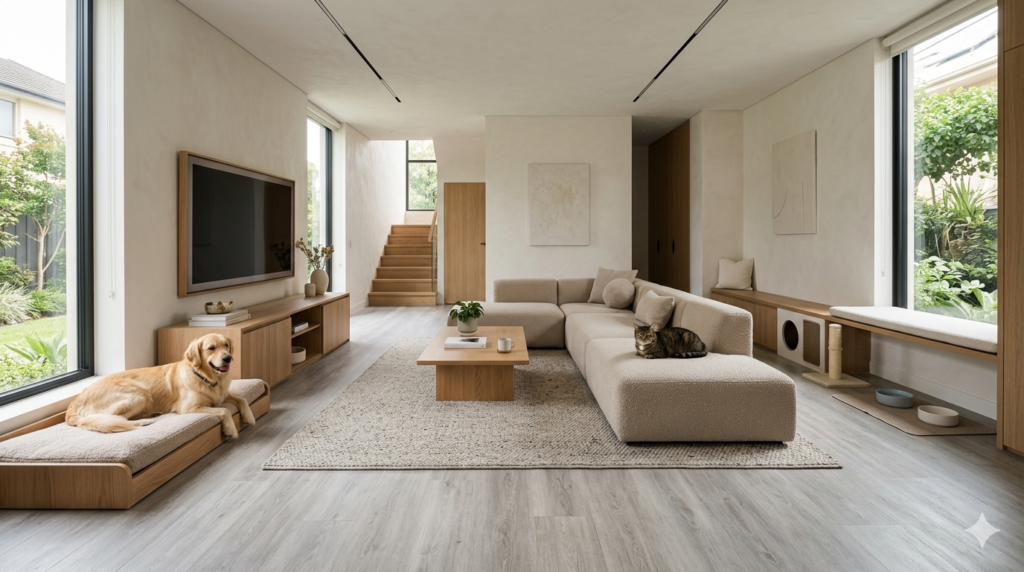
Let’s start with the foundation. If you’re renovating or moving, skip the traditional solid hardwood. It’s gorgeous, sure, but dog claws will turn it into a slip-and-slide and scratch it to pieces. In my own home, I swapped to luxury vinyl plank (LVP) flooring. It’s completely waterproof, highly scratch-resistant, and honestly, the wood-look options available today are incredibly convincing. Porcelain tile is another fantastic, durable alternative, especially in high-traffic areas like mudrooms and kitchens. When it comes to dog-friendly furniture, performance fabrics are your absolute best friend. I’ve had massive success with Krypton fabric and tightly woven microfiber.
Avoid loose weaves like linen, silk, or tweed claws will snag them instantly, and they hold onto pet hair like a magnet. Here’s a practical pro tip I learned the hard way: choose furniture with raised legs. It makes vacuuming underneath a breeze and stops dust bunnies (and lost toys) from accumulating. Just remember to manage your expectations; no fabric is entirely indestructible. If you have a teething puppy or a cat that loves to knead, keep washable throw blankets handy for their favorite spots.
The Non-Negotiables of Pet Safety
Pet-proofing goes way beyond just putting away your shoes. It’s about looking at your space from their eye level. Literally get down on your hands and knees. What do you see? Dangling blind cords? Exposed electrical wires? Secure them immediately. Next, you need to audit your houseplants. This is a critical safety step. Many popular indoor plants, like pathos, sago palms, and especially lilies (which are highly toxic and potentially fatal to cats), can cause severe health issues. I replaced my toxic greenery with pet-safe alternatives like spider plants, calanthes, and Boston ferns.
Always cross-reference new plants with the ASPCA’s toxic and non-toxic plant list before bringing them into your home. You should also rethink your cleaning supplies. Switch to pet-safe enzymatic cleaners for accidents. Traditional bleach or ammonia-based products aren’t just harsh on their paw pads; the lingering fumes can irritate their highly sensitive respiratory systems. Ethically, we have a responsibility to ensure the environment we force our pets to live in doesn’t harm them chemically.
Designing for Pet Enrichment
A pet-friendly home shouldn’t just be safe; it should be engaging. Animals need mental and physical stimulation, and you can actually build this right into your decor without it looking like a pet store exploded in your living room. For my cat, I installed floating wooden wall shelves that lead up to a cozy, cushioned window perch. It satisfies her natural instinct to climb and survey her territory without taking up valuable floor space. If you have a dog, consider building a crate or bed into your kitchen island, under the stairs, or into mudroom cabinetry.
It gives them a secure, den-like space that feels like a natural, architectural part of the house, rather than a wire cage shoved awkwardly in the corner. Giving them a dedicated “safe zone” also helps reduce anxiety when you have guests over. Even small touches matter. Installing a dedicated “mud station” by the back door with a built-in paw wash, a handheld sprayer, and towel hooks has saved my floors from countless muddy paw prints.
Managing the Mess
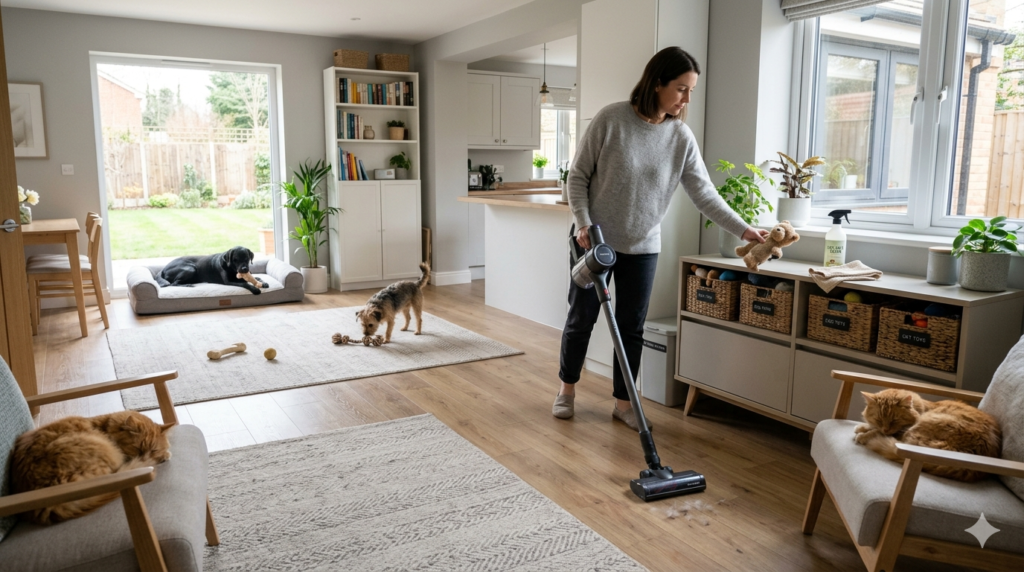
Let’s be real: pets are messy. Embracing a pet-friendly lifestyle means accepting that your cleaning routine will change. Invest in a high-quality HEPA air purifier. It’s an absolute game-changer for capturing airborne dander, reducing allergens, and neutralizing lingering odors. Swap out wall-to-wall carpeting for washable area rugs.
Brands that offer machine-washable rugs have been a lifesaver for me. When Barnaby inevitably has an upset stomach or tracks in something unidentifiable, I just peel the top layer off and toss it in the washing machine. It beats calling a professional carpet cleaner every three months and gives you incredible peace of mind.
Final Thoughts
Ultimately, designing a pet-friendly home is an ongoing exercise in compromise and creativity. It’s about creating a shared sanctuary where your pets can thrive and you can still genuinely love the space you live in. With the right materials, a bit of foresight, and a willingness to adapt, you really can have a beautiful home and a happy pet.
FAQs
Q: What is the best flooring for a pet-friendly home?
A: Luxury vinyl plank (LVP) and porcelain tile are the top choices. Both are highly scratch-resistant, 100% waterproof, and much easier to clean than traditional hardwood or carpet.
Q: How do I stop my cat from scratching my furniture?
A: Provide plenty of appealing alternatives, like tall sisal scratching posts, placed directly next to their favorite resting spots. You can also use double-sided sticky tape on furniture edges as a temporary deterrent while they learn.
Q: Are there any stylish, pet-safe houseplants?
A: Yes! Spider plants, Boston ferns, Calanthes, parlor palms, and peperomias are all non-toxic to cats and dogs. They add great texture and life to your home without the safety risks.
Q: What is the most durable couch fabric for pets?
A: Performance fabrics like Crypto, Sunbreak, and tightly woven microfiber are the most durable. They resist stains, repel moisture, and don’t easily snag on claws. Avoid leather (which can be punctured) and loose weaves like linen.