
Over the past fifteen years of working with dogs and cats in private practice and at adoption centers, one thing has become obvious: the diseases that show up most often are rarely surprises. They come from patterns small, repeatable habits that add up over months or years. You don’t usually walk in with a pet that is about to get sick; you walk in because something changed: the coat looks dull, the appetite wavers, the cat stops using the litter box, the dog breathes a little heavier on warm days. Understanding the most common pet diseases and, more importantly, the prevention tips that stop them before they start, changes the game. It shifts ownership from reacting to symptoms to running a stable, healthy home. Below is a practical guide drawn from real cases, not textbooks.
Parasite Problems: The Hidden Daily Risk

What shows up:
Roundworms, hookworms, fleas, and ear mites. These are the background noise of pet health often silent until a coat loses its shine or a dog scratches at its ears until they bleed.
Why they happen:
Pets pick these up from soil, other animals, or even contaminated bedding. Indoor cats think they’re safe they’re not. A single outdoor trip can bring in larvae.
Real example:
A 3-year-old Labrador I saw last spring looked fine until his coat started thinning on the back. A quick fecal test revealed heavy hookworm load. The dog hadn’t gone anywhere unusual; he just shared a yard with a older dog that had been managing its own parasites. One treatment series for both dogs, plus a month of environmental cleaning (bowls, mats, yard raking), cleared everything.
Prevention tips (simple, effective):
- Monthly external prevention: (flea/tick/heartworm product) even in winter. Heartworm is still active in mild climates and can be carried indoors on shoes.
- Fecal check at least once a year: especially for puppies, kittens, and multi-pet homes. It takes 10 minutes and catches problems before they cause anemia or weight loss.
- Clean bedding weekly: (heat kills eggs; vacuuming removes them).
Parasites are not poor dog issues they’re maintenance issues.
Dental Disease: The #1 Untreated Chronic Condition
What shows up:
Bad breath, yellow/gray tartar, red gums, difficulty chewing. By the time owners notice pain, 70–80% of dogs and 70% of cats over age 3 already have some level of periodontal disease.
Why it happens:
Plaque isn’t just cosmetic. Within 48 hours of eating, bacteria form a film that hardens into tartar. That tartar creates pockets where more bacteria live leading to inflammation, bone loss, and eventually bacteria entering the blood (which can affect the kidneys, heart, and liver).
Real example:
A 7-year-old cat came in because she stopped eating wet food. The mouth looked fine at first until we lifted the jaw. Severe bone loss around the premolars, abscesses that had been hidden under the gum line for months. Blood work showed early kidney stress. Three weeks of deep cleaning and a daily brushing routine brought her appetite back within a month.
Prevention tips:
- Brush 3–5 minutes, 3–4 times a week: Not daily 3–4 times a week keeps plaque from hardening. Use a pet-specific brush; human brushes are too soft and don’t reach the back teeth.
- Dental diet or chews: (those with the VOHC Accepted seal). They help but don’t replace brushing.
- Annual dental check: starting at age 2–3. By the time you feel a bump, it’s often already deep.
If you skip dental care, you’re not just risking bad breath you’re risking systemic illness.
Obesity: The Silent Multi-System Disease
What shows up:
Slow movement, difficulty climbing stairs, joint stiffness, increased resting heart rate, and eventually diabetes or hypertension.
Why it happens:
It’s not just too much food. It’s mismatched energy calories available in endless quantities vs. a species’ evolutionary activity level. Modern homes (car rides, heated floors, no chasing prey) remove the burn.
Real example:
A 9-year-old Beagle gained 6 pounds over 18 months. The owner thought it was just aging. By the time we measured his blood glucose, he had pre-diabetic levels. Weight loss of 4 pounds (less than a cup of kibble a day) brought his numbers back to normal within two months. The twist? The same food he had always eaten the portion was the problem, not the brand.
Prevention tips:
- Measure, don’t estimate. Use a cup or a measured bowl. Human portions for dogs/cats are almost always double what they need.
- Two smaller meals instead of one large one stabilizes blood sugar and reduces begging at 2 a.m.
- Force useless work: short bursts of walking, sniffing, or toy-based tasks 2–3 times a day. It doesn’t have to be a long walk; mental effort burns calories too.
- Weigh your pet at least every 3 months (not just look checks). A 2–3 pound change in a large dog is easy to miss visually but huge metabolically.
Obesity is the gateway to diabetes, arthritis, and heart strain and it’s almost always reversible if caught early.
Urinary Tract Issues (Dogs & Cats)
What shows up:
Straining, blood in urine, frequent small pees, or (in cats) sudden stop using the box with “spreading” outside the litter.
Why it happens:
Crystals forming in acidic urine, inflammation from bacteria, or a blocked urethra (in male dogs/cats — a veterinary emergency).
Cats are prone to FIC (feline interstitial cystitis) a painful condition with no infection but real suffering.
Real example:
A 5-year-old female cat started spattering in the corner of the box. It turned out to be early FIC plus mineral imbalance. Switching to a low-acid, magnesium-enriched litter and adding a daily omega-3 supplement cut her stress behaviors (hiding, over-grooming) within two weeks.
Prevention tips:
- Daily water access: not just a bowl. Fountains work better than static water for most pets; they drink 20–30% more.
- Regular urine checks at annual exams: (especially for female dogs and male cats). A quick dip stick can catch early crystals.
- Litter box hygiene: clean daily (not every few days). Scent from old waste irritates sensitive cats.
- Avoid over-feeding protein: (especially in cats). High protein + low water = higher crystal risk.
If your pet starts acting different with the bladder it’s worth a same-day visit. A blocked cat can go from comfortable to life-threatening in 24 hours.
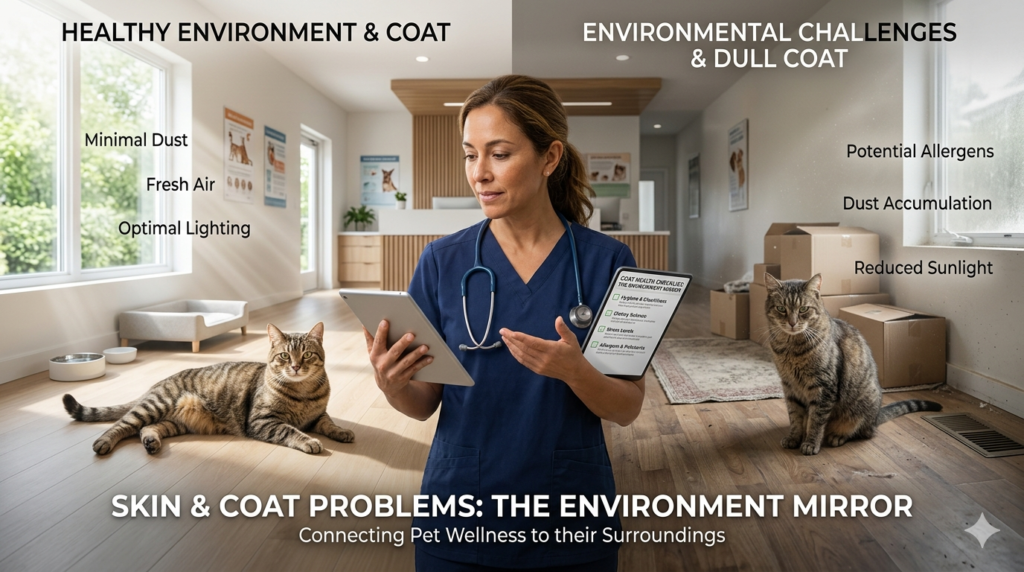
Skin & Coat Problems: The Environment Mirror
What shows up:
Red patches, itching, flaking, odor. Often linked to allergies (food or environmental), parasites, or yeast over-growth after a bacterial infection.
Why it happens:
Skin is the body’s interface with the world. Pollen, dust mites, cleaning products, and even laundry detergent can trigger chronic itching. Food allergies usually show up between 6 months and 2 years of age after the immune system matures.
Real example:
A 2-year-old Golden Retriever itched everywhere but tests were negative for fleas. After a 8-week elimination diet (single-protein, single-carb source), the itching vanished on week 5. Re-introducing chicken restored the symptoms a clear food allergy.
Prevention tips:
- Basic skin exam at every visit: check ears, paws, and belly skin. Small redness now can become a hot, infected patch later.
- Regular grooming (even short-haired dogs benefit from a quick weekly brush to remove loose hair and distribute oil).
- If you suspect food allergy: a 12-week elimination diet is the gold standard. Do not guess he eats chicken sometimes is not a diagnosis.
- Keep nails trimmed. Long nails scratch the skin when the pet rubs against furniture, creating micro-tears that infect.
Skin disease is rarely just itch. It’s often a signal that something in the environment or diet has shifted.
Senior-Specific Concerns: Kidney & Cognitive Health
After age 7–10 (dogs) or 12–14 (cats), the risk shifts:
- Kidney stress (early CKD): subtle changes increased thirst, slightly lower appetite, mild weight loss. By the time you see symptoms, the kidney has already lost 70% function.
- Cognitive dysfunction (furry dementia): disorientation, repeating actions, vocalization at night.
Real example:
An 11-year-old cat stopped using his favorite perch and would pace the hall at 3 a.m. Blood work showed early kidney changes + high cortisol (stress). A combination of a kidney-support formula, a calm environment (less visual clutter), and a consistent daily routine reduced the night pacing by 80% in six weeks.
Prevention tips:
- Annual blood work starting at age 7–10. Kidney values change slowly; a single snapshot is meaningless.
- Maintain water intake. Even a small increase (fountain or wet food) slows kidney decline.
- Mental stimulation: puzzle feeders, new paths during walks, short training sessions. Brains age like muscles they atrophied without use.
- Control weight. Extra weight increases blood pressure and kidney workload.
Senior care isn’t about treating disease after it appears; it’s about preserving function while the organs still have reserve.
A Practical Prevention Routine (5 Minutes a Day)
If you can only do a few things, these move the needle the most:
- Brush teeth: (2–3 times a week).
- Check weight: (once a month).
- Observe water intake: (daily more than 1 Oz per 2 lobs of body weight a day is a red flag).
- Quick skin/ear scan: (30 seconds each visit or weekly at home).
- Annual blood work + fecal test: for pets over 7 (or 5 if they have risk factors).
These small habits prevent the big hospital bills and the months of discomfort that follow.
FAQs
Q: How often should I take my pet for check-ups?
A: At least once a year for healthy pets under 7. Every 6–12 months for seniors (7+), or sooner if weight, appetite, or behavior changes.
Q: Can I prevent all diseases?
A: No some diseases (genetic, accidental injuries) can’t be prevented. But 80% of common issues (parasites, obesity, dental disease, early kidney changes) are highly preventable with consistent daily habits.
Q: Is a premium food enough for prevention?
A: Premium food helps, but it’s not a substitute for brushing, weight monitoring, parasite prevention, or annual labs. Think of food as one tool, not the whole plan.
Q: My cat drinks a lot of water suddenly should I worry?
A: Yes. A sudden 20–30% increase in water intake can signal kidney stress, diabetes, or heart failure. Check appetite and schedule a visit within 24–48 hours.
Q: Are home remedies (oils, herbs) safe?
A: Many are fine in small amounts (fish oil for joints, coconut oil for skin), but others interact with medications or mask symptoms. Always discuss any supplement with your vet before starting.