
After fifteen years of working in veterinary clinics and dog training facilities, I’ve seen every grooming disaster imaginable and plenty of beautiful transformations. The most common question I get from new dog parents isn’t about feeding or training; it’s about grooming. How do I not mess this up? they’ll ask, holding their trembling pup like a fragile artifact. Here’s the truth: proper grooming isn’t about perfection. It’s about preventing problems, building trust, and creating a ritual that keeps your dog healthy and happy.
Why Grooming Matters More Than You Think
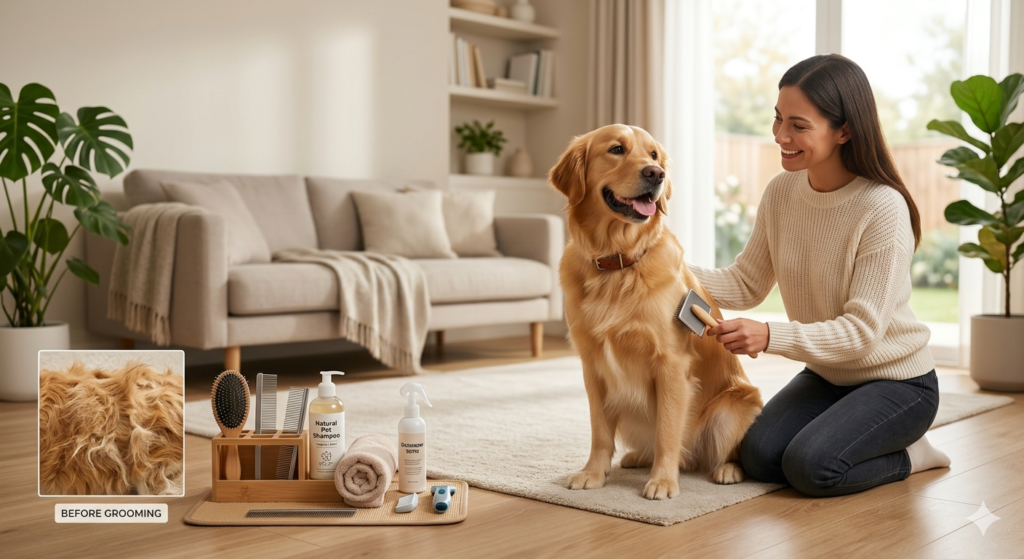
Let’s start with the basics that most people skip. Regular grooming isn’t just vanity it’s preventive healthcare. When you brush your dog weekly, you’re catching mats before they become painful knots that require sedation to cut out. When you trim nails properly, you’re preventing the yelp moment that comes when a nail hits the quick and your dog suddenly learns to hate you. When you check ears during bath time, you’re potentially spotting ear mites before they cause a full-blown infection.
I once had a client whose German Shepherd had terrible skin allergies. The vet diagnosed her after a grooming session where I noticed her dog’s red, itchy patches. The skin issues were caused by a diet problem, but we caught it early because the client was diligent about weekly grooming. That’s the kind of insight regular maintenance provides.
The Essential Grooming Toolkit
Before you dive in, gather these basics:
Brushes and Combs: Start with a slicker brush for most breeds, plus a wide-tooth comb for final detangling. Don’t buy the $200 professional kit begin with mid-range tools from reputable brands like Furminator or the brush sets from Petco. The quality matters, but not at that extreme.
Bathing Supplies: A gentle dog shampoo designed for your dog’s coat type. Avoid human shampoo; the pH balance is completely wrong. A non-slip mat for tubs, a cup for rinsing (never your hands), and a good blow dryer with a cool setting. The blow dryer is non-negotiable wet dogs are cold dogs.
Nail Trimmers: Get the proper dog clippers or grinders. The ones that look like tiny human nail clippers will snap your nails and stress your dog. For dogs with black nails, you’ll need a good LED nail light to see the quick.
Ear Cleaning: A vet-recommended ear cleaner and soft cotton balls. Never stick anything into the ear canal just the outer part.
Toothbrush and Paste: Yes, this counts. Dog toothpaste and a soft brush. Dental care is grooming, and it’s the easiest part.
The Weekly Routine: Start Small
Here’s where most beginners go wrong they try to do everything at once. Don’t. Pick one day a week and stick to three things: brush, check ears, and trim nails. That’s it. Do it for four weeks straight. By week five, add a bath if your dog needs it. By month two, you can tackle more. The key is consistency over intensity. A five-minute brushing session every Sunday is infinitely better than a chaotic hour-long “spa day” that traumatizes everyone.
Brushing: The Foundation of Good Grooming
Brushing isn’t just about making your dog look nice. It’s about distributing natural oils, preventing mats, and checking for skin issues. Start at the tail and work forward. Most dogs are more relaxed when you work from the back toward the front.
The Matted Mess: If you have a long-haired breed, you’ll deal with mats. When you see one, don’t panic. Mats are like concrete they won’t budge with brushing. Use a mat splitter tool, work gently, and if it’s large, take it to a groomer. Trying to cut out a mat yourself can cause painful tears in your dog’s skin.
Breed-Specific Tips: Poodles need regular hand-stripping to prevent matting. Huskies need daily brushing in shedding season or they’ll be fur-bombs. My own rescue, a Border Collie mix, requires 15 minutes of brushing every other day or she turns into a furry octopus.
Bathing Without the Bathing Suit
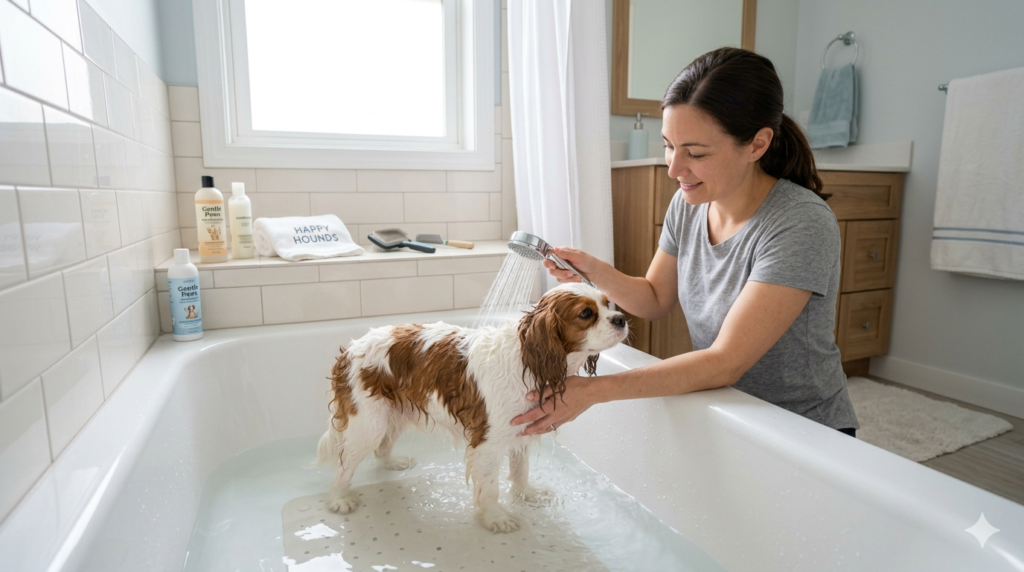
The first bath with your dog is always the hardest. They don’t understand why you’re soaking them, and neither do you. Here’s how to make it work:
Temperature Matters: Use lukewarm water. Hot water strips natural oils; cold water stresses dogs. The water should feel like a warm shower to you.
The Three-Bath Rule: Most dogs only need three baths a year. Over-bathing dries their skin and can cause more problems than it solves. If your dog is dirty, bathe them. If they’re not, brush them and let nature take its course.
Drying is Half the Battle: The worst part of bathing is the drying. Use a blow dryer on the lowest heat setting. Hold it six inches away and move it constantly. Your dog will hate it at first, but they’ll get used to it. I always blow-dry my dogs’ feet first they’re the warmest part and smell the worst when wet.
Nail Trimming: The “Squeaky Nail” Solution
Nails that click on the floor are too long. The solution isn’t to let them grow out (which can cause joint problems) but to trim them properly. The trick is knowing where the quick is the blood vessel inside the nail.
For Light-Nailed Dogs: If you can see a white circle in the middle of a black nail, you’re in trouble. Use a grinder instead of clippers. The grinder lets you see the quick as you grind away, and it doesn’t create a sharp edge that can cut pads.
For Dark Nails: Get an LED nail light. It illuminates the quick so you can avoid it. Take tiny amounts off just the white tip. Your dog will hate this, so have treats ready and go slowly.
The Emergency: If you accidentally cut the quick, apply pressure with a clean cloth. The bleeding will stop within minutes. It hurts, but it’s not catastrophic. Just learn from the mistake and use a grinder next time.
Ear Care: Prevention Over Cure
Dogs can’t shake their ears like we do. That means wax builds up, moisture gets trapped, and infections start. During bath time, check ears weekly.
The Right Way: Use a cotton ball dipped in vet-approved cleaner. Wipe the outer ear only. Never insert anything into the canal. If you see redness, odor, or dark wax, schedule a vet visit. Home remedies can make things worse.
Breeds Matter: Floppy-eared breeds like Cocker Spaniels need weekly ear cleaning. My own Cocker Spaniel mix, Bella, has her ears cleaned every Sunday without fail. It’s a five-minute task that prevents months of vet bills.
Haircuts: When to DIY and When to Call a Pro
The question isn’t Can I cut my dog’s hair? but Should I? Some breeds, like Poodles or Shih Tzu’s, benefit from regular trims that are best done by professionals. Others, like Boxers or Bulldogs, can handle basic home maintenance.
The Home Trim: If your dog has a short coat and you just need to tidy up, it’s fine. Use grooming scissors, not kitchen shears. Start with the scruff and work down. Take baby steps. You can always trim more; you can’t untrim.
When to Walk Away: If your dog needs a full cut, has a complex coat, or you’re just nervous, hire a groomer. The cost is worth the peace of mind. I always tell clients: it’s better to spend $50 on a groomer than $500 on a vet bill from a bad haircut.
Common Grooming Mistakes That Create Problems
After years of seeing dogs, I’ve identified the top errors:
Over-Bathing: As mentioned, this dries skin and causes issues. Three baths a year is plenty for most dogs.
Using Human Products: The pH is completely wrong. Human shampoo will strip your dog’s skin and cause irritation.
Skipping the Blow-Dryer: Wet dogs are cold dogs. They shiver, which raises their body temperature and can cause health issues.
Forcing the Process: If your dog hates grooming, you’re doing it wrong. Take breaks. Make it positive. Grooming should be a bonding experience, not a battle.
Ignoring the Coat: If you don’t like your dog’s coat, consider a breed that matches your lifestyle. Some breeds shed like crazy. Others need daily brushing. Be realistic about what you’re signing up for.
The Emotional Side of Grooming
Here’s what the books don’t tell you: grooming is emotional labor. Your dog associates you with the brush, the bath, the dryer. If they see it as negative, they won’t let their guard down. They’ll be tense, and you’ll struggle.
Making It Positive: Start with treats. Let your dog sniff the tools. Do a single brush stroke and immediately reward. Build up slowly. My own grooming routine takes 20 minutes because my dog needs time to decompress. That’s okay. Quality matters more than speed.
The Bonding Factor: The best groomers I’ve known aren’t the fastest they’re the most patient. They talk to their dogs, make eye contact, and build trust. You can learn this. It’s not about technique; it’s about attitude.
Final Thoughts: Grooming as Preventive Care
Grooming isn’t a chore; it’s a check-up. It’s how you know your dog is healthy, happy, and safe. The time you invest now prevents bigger problems later. And yes, it’s messy, stressful, and sometimes frustrating. But so is every part of dog ownership.
Start small. Be consistent. Be patient. Your dog will learn to trust you, and you’ll learn to read their needs. That’s the real goal not a perfectly styled coat, but a healthy, comfortable dog who feels safe in your care.
FAQs
Q: How often should I bathe my dog?
A: Most dogs need baths every 3-4 weeks. Over-bathing strips natural oils and causes skin irritation.
Q: What if my dog hates grooming?
A: Take it slow. Use positive reinforcement, break sessions into tiny chunks, and make it a calm, low-stress experience. Professional help is okay.
Q: Can I use human shampoo on my dog?
A: No. Human shampoo has a different pH balance that can irritate your dog’s skin and cause dryness or infections.
Q: How do I know when to trim my dog’s nails?
A: When you can hear them clicking on the floor. The quick should never be cut. Use a grinder for dark nails to avoid accidents.
Q: What breeds need the most grooming?
A: Long-haired breeds like Poodles, Shih Tzu’s, and Huskies need regular brushing. Floppy-eared breeds need weekly ear cleaning. Short-haired breeds need minimal maintenance.