
In my fifteen years of working with animals ranging from stubborn French Bulldogs to high-strung rescue cats I’ve learned one universal truth: putty training isn’t actually about the pet. It’s about the person. We often approach housebreaking as a chore to be completed, but in reality, it is a communication exercise. You are teaching a different species how to navigate a human environment that, frankly, makes very little sense to them.
If you’ve ever stood in the rain at 3:00 AM waiting for a puppy to do its business only for them to come inside and immediately pee on the rug, you know the frustration. But I promise you, with a bit of biological understanding and a shift in strategy, you can get through this phase without losing your mind or your flooring.
Understanding the Window of Opportunity
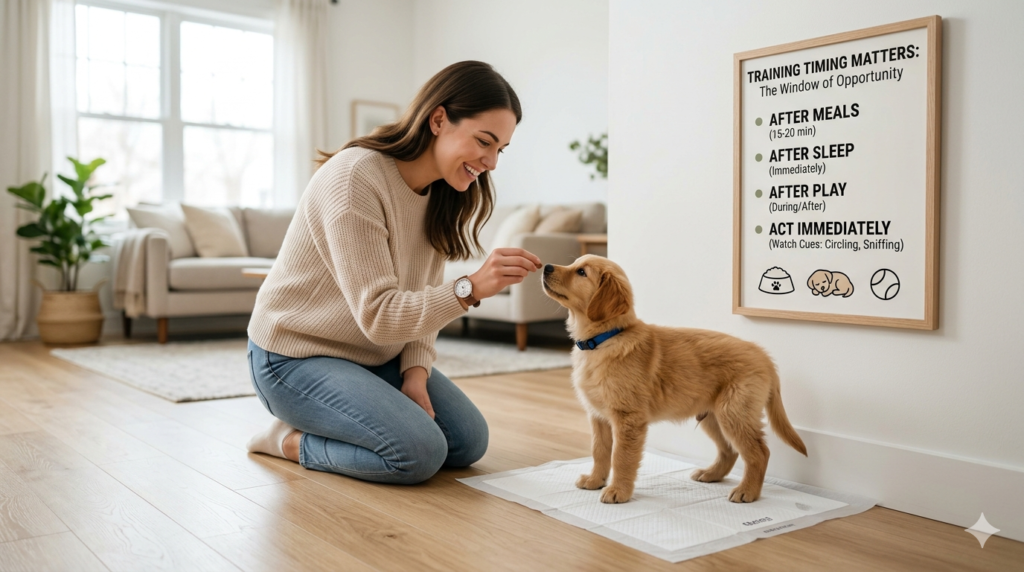
The biggest mistake I see owners make is overestimating their pet’s physical capacity. A young puppy’s bladder is roughly the size of a walnut. Physiologically, they can usually hold it for one hour for every month of age. A two-month-old puppy is physically incapable of waiting six hours. Cats are a bit different; they have an instinctual drive to bury their waste.
For them, putty training is less about teaching where to go and more about ensuring the environment (the litter box) meets their exacting standards. Regardless of the animal, the secret to success is anticipation. You want to catch them before they have the urge, not while they are in the act.
The Dog Protocol: Structure over Scolding
If you want to housebreak a dog quickly, you need to live by the clock. I recommend a High-Frequency Outing schedule. This means taking the dog to their designated spot:
- Immediately after waking up.
- After every meal (digestion triggers the urge to go).
- After a vigorous play session.
- Right before bed.
The “Five-Minute” Rule
When you take your dog outside, don’t make it a fun walk. This is a business trip. Stand in one spot and give them five minutes. If they go, celebrate like they just won an Olympic gold medal. Treats, praise, and high-pitched Good boys! are mandatory. If they don’t go within five minutes, bring them back inside, but keep them confined to a crate or a small playpen. Try again in 20 minutes. This prevents them from wandering off to a quiet corner of the living room to find a secret spot.
A Note on “Accidents”
If you catch your dog in the act, a sharp Oops! is enough to interrupt them. Pick them up and rush them outside. If you find a puddle after the fact, do not rub their nose in it or yell. They lack the cognitive link to connect a punishment now with an action they took ten minutes ago. All you’re doing is teaching them to be afraid of you. Clean it up with an enzymatic cleaner standard soap won’t break down the proteins in urine, and if they can smell it, they will keep returning to that spot.
The Feline Factor: Location and Texture
Cat owners usually have it easier, but when things go wrong, they go very wrong. If a cat is urinating outside the box, they are usually trying to tell you something.
First, look at the box itself. Many commercial litter boxes are designed for human aesthetics, not feline comfort. A covered box might look neat, but it traps odors and makes the cat feel cornered. Most cats prefer an open-top, large tray.
Second, consider the Litter + 1 rule. If you have one cat, you need two boxes. If you have two cats, you need three. Cats are territorial about their bathrooms, and sometimes a bully cat will guard the hallway leading to the only box, leaving the other cat no choice but to use the laundry pile.
The Gear That Actually Matters
You don’t need a lot of gadgets, but a few things are non-negotiable:
- Enzymatic Cleaner: As mentioned, this is the only way to truly remove the scent.
- Long Leash: For dogs, keeping them on a leash even in the backyard helps keep them focused on the task at hand.
- High-Value Treats: Kibble isn’t enough for putty training. Use small pieces of boiled chicken or freeze-dried liver. You want them to think, Every time I pee on this grass, something amazing happens.
Dealing with Regression
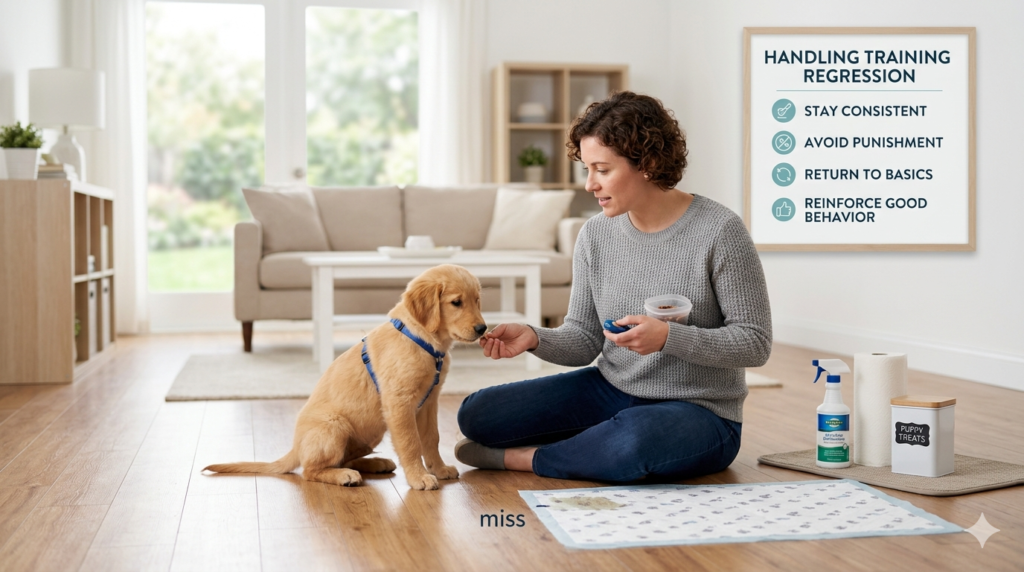
I often get calls from panicked owners saying, He was doing so well for three weeks, and suddenly he’s peeing on the couch! Regression is normal. It often happens around the 6-month mark for dogs or during times of stress (moving house, a new baby, or even a change in work schedule). If this happens, go back to basics. Re-introduce the crate, tighten the schedule, and increase the rewards.
However, if a perfectly trained adult pet suddenly starts having accidents, visit the vet. Urinary tract infections (UTIs), bladder stones, or age-related issues like incontinence can look like a behavioral problem but require medical intervention.
The Emotional Component: Patience as a Strategy
The hardest part of putty training isn’t the cleaning; it’s the patience. It is easy to feel like your pet is being spiteful. I’ve heard people say, She looked me right in the eye while she did it!”Pets don’t do things out of spite.
That look is usually a sign of anxiety or a desperate attempt to communicate that they can’t hold it anymore. When you stay calm, your pet stays calm. High stress actually inhibits learning. If you are tense and angry, your dog will be too worried about your reaction to focus on the physical urge to go.
Summary of the “Fast-Track” Method
- Prevent: Use crates or baby gates to limit their space until they are reliable.
- Predict: Use a log or an app to track when they eat and when they go. You’ll see a pattern within 48 hours.
- Praise: Reward the behavior you want, and ignore (but clean) the behavior you don’t.
Potty training is a temporary season. It feels like it will last forever when you’re scrubbing a rug at 2:00 AM, but with consistency, it usually clicks within a few weeks. Stay the course, keep the chicken treats handy, and remember that you’re building a bond that will last a decade or more.
FAQs
Q: How long does it typically take to fully housebreak a puppy?
A: Most puppies are reliable by 6 months of age, but some breeds (like small terriers or Chihuahuas) can take up to a year to be 100% accident-free. Consistency is the main variable.
Q: My dog won’t pee when it’s raining. What do I do?
A: You have to go out with them. Use a large umbrella to cover both of you, or find a covered area like a porch or garage with a patch of artificial turf. If you give in and let them go inside, you’re teaching them that rain is an excuse.
Q: Is it okay to use “puppy pads”?
A: I generally advise against them unless you live in a high-rise apartment. Pads teach the dog that it is okay to go on a soft surface inside the house, which can make the transition to grass much harder later on.
Q: Why is my cat suddenly peeing on my bed?
A: This is often a sign of stress or a medical issue like a UTI. Cats often pee on soft things that smell like their owner when they feel insecure. Clean the area with an enzyme cleaner and take the cat to the vet to rule out crystals or infection.
Q: Can older dogs be potty trained?
A: Absolutely. The process is the same as with a puppy, but you may need to move faster through the stages. Older dogs often have better bladder control, making the learning phase go quicker once they understand where the bathroom is.