
We’ve all seen those perfectly staged Instagram posts of dogs sticking their heads out of convertible windows, windblown ears fluttering. It looks adventurous. It looks idyllic. But here’s the unfiltered truth from someone who’s lived the reality of it: pet travel isn’t just about the fun part. It’s about preparation that happens three days before you even turn the ignition. Over the last five years, I’ve traveled across the country twice by air and three times by road with two different rescue mixes.
One had anxiety issues from a past shelter stay; the other was a calm soul until the engine started. My early attempts were sloppy. I once forgot water bowls and ended up begging strangers at rest stops for ice water. Not exactly dignified for a dog lover. Since then, I’ve built a robust protocol. If you want your four-legged companion to enjoy the journey as much as the destination, there is a specific set of gear and documents you simply cannot skimp on.
The Paperwork: More Than Just a Rabies Shot

Let’s start with the unsexy stuff. Before you pack a single sock, check your documentation. This is where most people fail their first test of readiness. Veterinary records aren’t just a nice-to-have; they are your entry ticket. Whether you’re crossing state lines or international borders, rules are tightening. A current rabies certificate is standard, but many states require a health certificate issued within 10 days of travel. I learned this the hard way when a border patrol agent almost turned us back because our paperwork wasn’t signed in ink by the licensed vet, despite being digitally printed.
Beyond the official docs, carry proof of vaccinations and parasite prevention records. Airline staff can ask. If you’re driving through rural areas where tick-borne diseases are prevalent, proving your pup is on heartworm preventative shows due diligence. Also, make digital copies of everything. Cloud storage is reliable, but keeping a printed backup in a waterproof pouch is never a bad idea.
The Comfort Anchor
Animals rely heavily on routine. When you disrupt their environment be it a cabin in the woods or a hotel room downtown they look for anchors. For me, this means a small item of yours that smells like you. A worn t-shirt or a jacket thrown into the carrier goes a long way toward reducing cortisol spikes. I recommend bringing their favorite chew toy or blanket, but with a caveat: bring a backup version. Nothing is worse than a beloved fleece blanket getting ripped in transit or lost under a hotel seat. If the primary item is destroyed, having a second one ensures the comfort remains consistent.
Also, consider the carrier itself. A soft-sided bag might feel cozy, but if your cat is a shredder, a hard-shell kennel is safer. During a layover in Chicago, I watched a stressed dog panic because their crate was too small to stand comfortably. Always verify airline dimensions ahead of time. Some airlines measure height with the lid on, others don’t. Being off by an inch can mean denied boarding at the gate.
Nutrition and Hydration Logistics
Packing food sounds simple, but logistics change when travel plans go south. Delays happen. Flights get cancelled. If you’re driving for eight hours, traffic jams extend that to twelve. I always pack at least 1.5 times the amount of dry kibble I estimate I’ll need. Wet food? Keep it sealed. Temperature fluctuations can spoil cans quickly if the AC breaks in your car.
Regarding water, don’t trust local taps everywhere. In certain hotels or RV parks, pipe quality is questionable. Bring bottled water specifically labeled for consumption. And here’s a pro tip: pack collapsible silicone bowls. They save space and are sanitary. Plastic ones can retain odors, which makes some picky eaters refuse to eat. Silicone wipes clean easily and fold flat against your gear.
Safety Gear That Actually Works
Leashes and collars seem obvious, but do you have a dual-attachment harness? Standard collars pop off if a dog bolts. A no-pull harness distributes pressure better. However, if you are flying, a crash-tested harness is non-negotiable. The FAA recommends securing cats and small dogs in approved carriers. For larger dogs, the only safe spot is usually the cargo hold, which brings its own emotional toll. Speaking of carriers, ensure they are ventilated properly. Heat stroke is a silent killer on summer drives. Never leave a pet in a parked car, not even for five minutes.
We know the stats, but it bears repeating. For car travel, bring a barrier net if you have a hatchback. It prevents the dog from lunging forward during sudden stops. In my experience, an unbraced dog becomes a projectile within seconds of a braking event. Seatbelt tethers are okay for short hops, but sturdy nets offer superior protection for highway speeds.
The Emergency Kit: Hope for the Best, Prepare for the Worst
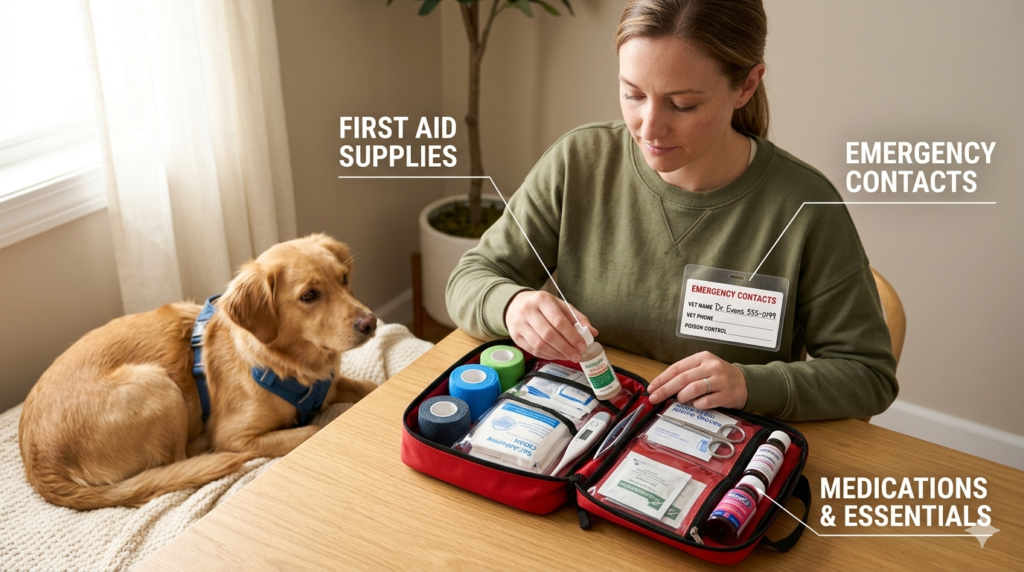
Travel is unpredictable. A cut paw on rocky terrain or a sudden bout of diarrhea can derail a trip. Your medical kit shouldn’t just be aspirin and bandages. Include a thermometer designed for pets, antibiotic ointment, and a pet-specific probiotic powder for stomach upset. Stress triggers digestive issues often enough that carrying Pepto-Bismol (in the right dosage) can save a day at a campsite. You also need poop bags lots of them and enzyme cleaner.
Cleaning up messes instantly keeps bacteria down and neighbors happy. Finally, a recent photo of your pet in high resolution. If they slip away, this aids identification. Microchips are great, but a visible tag with a mobile number and a photo on your phone is faster for immediate help.
The Ethics of Travel
Lastly, we have to address the elephant in the room. Sometimes, travel isn’t suitable for your animal. Senior pets or those with severe respiratory issues may suffer more than they benefit. There’s a misconception that if they can walk, they can fly. They can’t necessarily endure the pressure changes and noise.
If you notice your pet showing signs of excessive panting, drooling, or trembling during pre-trip packing, pause. Is there a reputable pet sitter available? Or a local friend? Responsible ownership isn’t just about packing; it’s about knowing when to keep them close to home.
Final Thoughts
Bringing your pet along opens up new adventures, but it requires shifting the responsibility from yourself to them. By prioritizing documentation, comfort, nutrition, safety, and ethics, you create an environment where stress is minimized. I’ve found that when I stick to this checklist, my dogs are curious explorers rather than anxious refugees.
The goal isn’t perfection; it’s resilience. You’re going to deal with spilled water or missed turns regardless of how prepared you are. But having your essentials organized means you spend less time troubleshooting and more time making memories.
FAQs
Q: How much extra food should I bring for a long road trip?
A: Pack at least 1.5 times your estimated daily requirement to account for delays or lost luggage scenarios.
Q: Are airlines allowed to take dogs in cabins?
A: Policies vary strictly by airline. Usually, only small pets under a specific weight limit are permitted in the cabin inside an approved carrier.
Q: What is the best type of water bowl for travel?
A: Collapsible silicone bowls are lightweight, durable, and easy to clean compared to rigid plastic versions.
Q: Can I give my dog CBD oil while traveling?
A: Consult your veterinarian first. Laws regarding CBD vary by state and country, and dosages must be vet-approved.
Q: Should I feed my pet immediately before a flight?
A: Generally, no. Most vets suggest feeding 4 hours prior to travel to reduce nausea and the risk of accidents mid-journey.