
I still remember the first night we brought our golden retriever, Charlie, home. He was eight weeks old, all paws and ears, and completely clueless about everything including where to pee. Within 48 hours, he’d chewed through a phone charger, had three accidents on the rug, and figured out how to escape the kitchen gate. I was exhausted, frustrated, and Googling is it normal to regret getting a puppy at 2 AM.
That was six years ago. Today, Charlie is the most well-behaved dog I know, and honestly, the training journey we went through together taught me more about patience than anything else in my life. Whether you just brought home your first puppy or you’re preparing to, here’s what actually works based on real experience, not just textbook theory.
Start With the Right Mindset
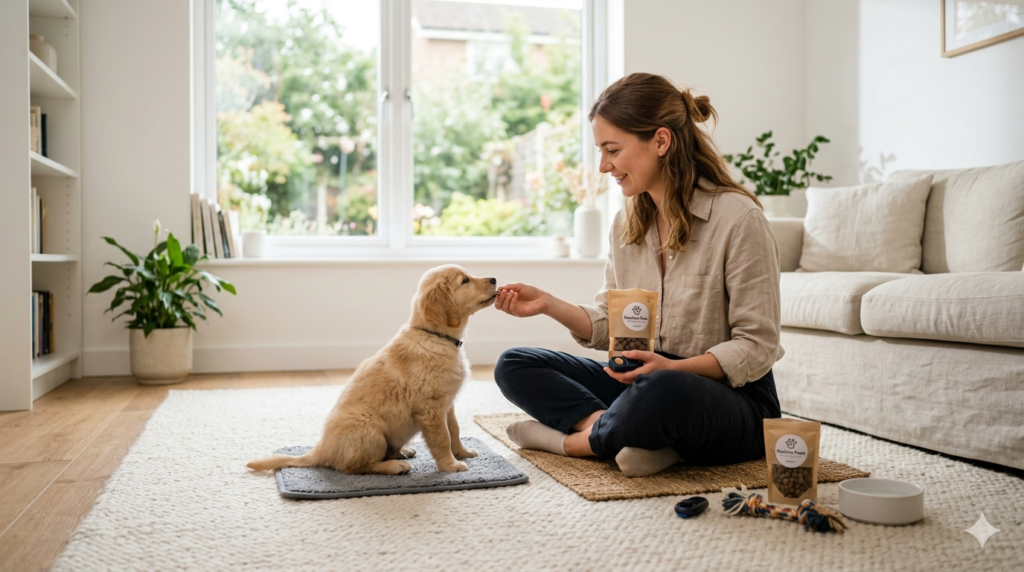
Before you teach a single command, understand this: puppies aren’t being bad. They’re babies exploring the world with their mouths, noses, and boundless energy. When your puppy chews your shoe, he’s not plotting against you. He’s teething, bored, or both.
Training isn’t about domination or showing your dog who’s boss. Modern, evidence-based dog training relies on positive reinforcement rewarding behaviors you want and redirecting the ones you don’t. Punishment-based methods might seem effective short-term, but they erode trust and can create anxiety or aggression down the road. I’ve seen it happen with friends’ dogs, and it’s heartbreaking.
House Training: The First Big Hurdle
Let’s be honest putty training is probably why you’re reading this article. It’s everyone’s top priority, and for good reason. Here’s the system that worked for us and countless other puppy owners I’ve talked to:
Establish a schedule: Puppies need to go outside after waking up, after eating, after playing, and roughly every 1-2 hours in between. Yes, it’s a lot. Set alarms on your phone if you need to.
Pick one spot: Take your puppy to the same area every single time. The scent helps them associate that location with going to the bathroom.
Celebrate like crazy: When they go in the right spot, treat them immediately. I’m talking high-value treats tiny pieces of chicken or cheese work wonders. Make it a party. You want them thinking, Wow, peeing outside is the BEST thing that ever happened.
Don’t punish accidents: Rubbing a puppy’s nose in their mess doesn’t teach them anything useful. It just makes them scared of you. Clean it up with an enzymatic cleaner, take a deep breath, and move on.
Most puppies get reliably house trained somewhere between 4-6 months, though some breeds take longer. Smaller breeds, in my experience, tend to be a bit more challenging their tiny bladders fill up fast.
The Essential Commands
You don’t need to teach your puppy 30 tricks in the first month. Focus on four foundational commands that build everything else.
Sit. Hold a treat above your puppy’s nose and slowly move it backward over their head. Their butt naturally drops. The second it touches the ground, say “sit,” give the treat, and praise. Most puppies pick this up within a day or two.
Stay. Once sit is solid, ask for a sit, then hold your palm out and say “stay.” Take one step back. If they hold position even for two seconds, reward immediately. Gradually increase distance and duration over weeks.
Come. This one could save your dog’s life someday. Start in a hallway or small room. Say your puppy’s name followed by “come” in an enthusiastic voice. When they run to you, reward generously. Never call your puppy to you for something unpleasant like nail trimming — that poisons the cue.
Leave it. Place a treat in your closed fist. When your puppy stops pawing and licking at your hand, even momentarily, mark the behavior with “yes!” and reward with a different treat from your other hand. This command is invaluable when your puppy finds something dangerous on a walk.
Socialization: The Window You Can’t Reopen
Between roughly 3-14 weeks of age, puppies go through a critical socialization period. What they experience during this window shapes how they respond to the world for the rest of their lives. This is not an exaggeration. Expose your puppy to different people, sounds, surfaces, other vaccinated dogs, car rides, and environments. Keep every experience positive.
If your puppy seems scared, don’t force it back off and try again more gradually. One important caveat: talk to your vet about socialization before your puppy is fully vaccinated. You can carry them in public places, visit friends’ healthy dogs, and attend well-run puppy classes but avoid dog parks and high-traffic areas until their vaccine series is complete.
Crate Training Done Right
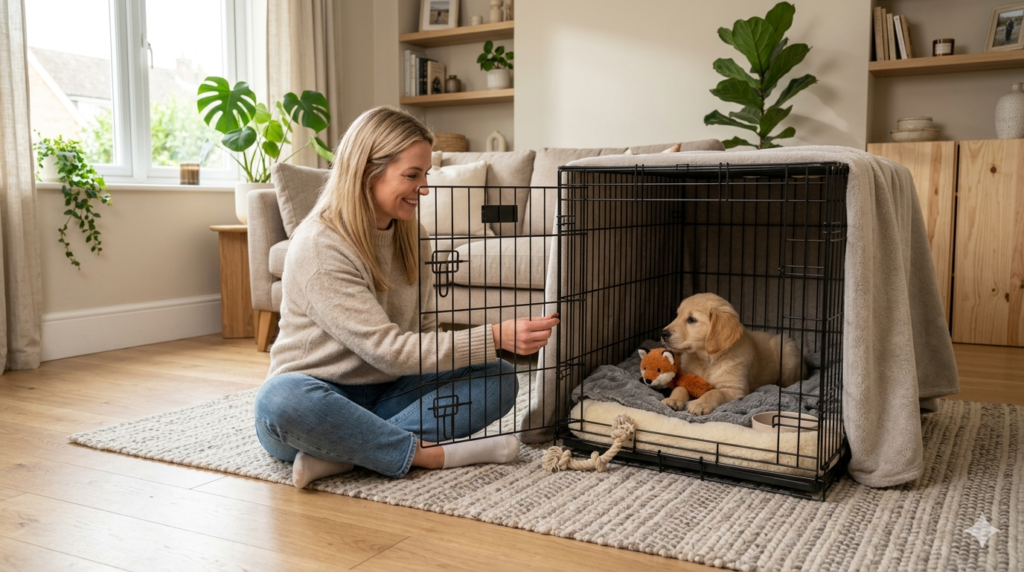
A crate isn’t a punishment box. Done properly, it becomes your puppy’s safe haven their den. Make it cozy with a blanket, toss treats inside, and feed meals in there. Never force your puppy in or use the crate as timeout. Start with short intervals. Five minutes, then ten, then twenty. Build up gradually. Charlie actually puts himself in his crate now when he’s tired. That’s the goal.
Handling Biting and Nipping
Puppy teeth are razor blades. When your puppy bites during play, let out a quick yelp, stop playing, and turn away for 15-20 seconds. This mimics how littermates teach each other bite inhibition. Redirect to an appropriate chew toy immediately after. Consistency matters more than any single technique. Every family member needs to respond the same way.
The Bigger Picture
Training isn’t a one-month project. It’s an ongoing conversation between you and your dog that evolves over years. Some weeks you’ll see incredible progress. Other weeks, your puppy will seemingly forget everything and eat drywall. That’s normal.
If you’re struggling, invest in a certified professional dog trainer look for credentials like CPDT-KA or KPA-CTP. Group puppy classes are affordable and provide socialization opportunities too.
The effort you put in now pays dividends for the next decade-plus. A well-trained dog gets more freedom, more adventures, and a richer life. So does their owner.
FAQs
Q: What age should I start training my puppy?
A: Start basic training as soon as you bring them home, typically around 8 weeks. Puppies are capable of learning simple commands at this age.
Q: How long should puppy training sessions last?
A: Keep sessions to 5-10 minutes. Puppies have short attention spans, and multiple brief sessions throughout the day work better than one long one.
Q: What treats are best for puppy training?
A: Small, soft, high-value treats work best. Tiny pieces of boiled chicken, cheese, or commercial training treats are popular choices. Avoid anything too large or hard to chew quickly.
Q: Is it too late to train an older puppy?
A: Absolutely not. While early socialization windows close, dogs can learn new behaviors at any age. It may take more patience, but older puppies and adult dogs respond well to positive reinforcement training.
Q: Should I use a clicker for training?
A: Clickers are great for marking precise behaviors, but they’re optional. A consistent verbal marker like yes! works just as well for most pet owners.