
When people ask me about the best dog nutrition plan, they usually mean one of two things: What should I feed? and How do I know it’s actually working? Healthy growth is less about chasing the newest bag of kibble or the shiniest supplement and more about building a steady, age-appropriate routine that supports the way puppies and young dogs naturally develop bones, muscles, immune system, teeth, skin, and energy levels.
Over the years, I’ve helped families through everything from brand-new puppy chaos to my guy is still hungry after meals and my puppy’s stool is soft again. The patterns are surprisingly consistent. A good nutrition plan doesn’t just look balanced on paper it behaves well in real life. Below is a practical, research-informed way to build a dog nutrition plan for healthy growth, with the flexibility to adjust for breed, body condition, and individual needs.
Start with the right stage: growth isn’t one phase
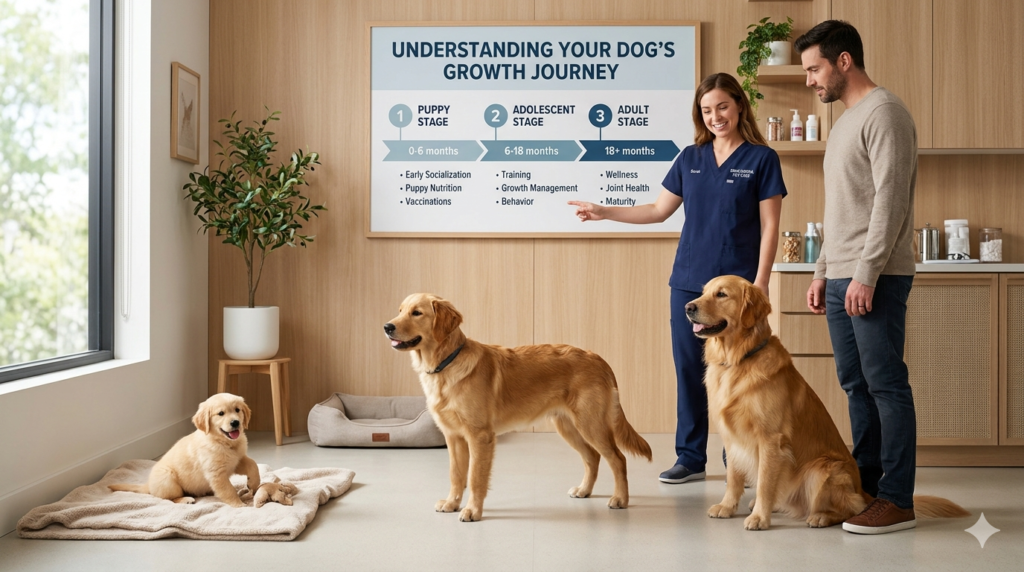
A nutrition plan for a 10-week-old puppy is very different from one for a 6-month-old adolescent dog, and both are different again from adult maintenance.
Typical growth stages:
- Puppy (about 0–12 months): Rapid growth, big appetite swings, sensitive digestion.
- Adolescent (about 6–18 months, varies by breed): Slower growth but still needs quality protein and minerals.
- Large/breed-specific considerations: Large and giant breeds often need carefully managed calcium/phosphorus and slower growth to protect joints.
Why this matters:
I’ve seen too many “healthy adult dog” foods fed too early, and the result is usually bland nutrition (or wrong mineral balance) plus slower, uneven development or in some cases, digestive issues.
If you’re unsure about timing for your dog’s breed size, your vet or breeder can usually guide you. When in doubt, focus on age-appropriate formulas and adjust based on body condition, not marketing claims.
Choose a foundation: balanced commercial food vs. homemade (with caution)
Best baseline for most families: a complete and balanced puppy food from a reputable manufacturer. Look for the label saying it’s formulated to meet AAFCO (or equivalent) nutrient profiles for growth.
There’s a reason this is the default: manufacturers test for nutrient adequacy, not just ingredient lists. Homemade diets can be excellent—but only when they’re properly formulated to avoid imbalances. Calcium and phosphorus errors can be a bigger deal than most people realize, especially for large breeds.
My rule of thumb:
- If you want the most reliable “healthy growth” plan with the least risk: use a quality complete puppy diet.
- If you want to cook at home: talk to a veterinary nutritionist, especially for puppies and giant breeds.
About grain-free and trendy diets:
In recent years, there has been public concern around certain grain-free diets and potential associations with dilated cardiomyopathy in some dogs. The science is still evolving, but ethically, I recommend avoiding hype-based choices and sticking to diets with a clear track record and nutrient balance.
Nail the macronutrients: protein and fat support the building blocks
For healthy growth, protein and fat matter but they need to be in the right range for your puppy’s age and size.
Protein (for muscle and tissue growth):
- A growing puppy should have a high-quality protein source as a major ingredient.
- I don’t obsess over percentage protein as much as I evaluate digestibility and overall balance, but generally, growth formulas provide higher protein than adult maintenance.
Fat (for energy and healthy skin/coat):
- Fat contributes to calorie density and supports development.
- Too little can lead to dull coat and low energy; too much can contribute to overly fast weight gain—especially risky for larger breeds.
One real-life example:
A friend of mine fed a very lean puppy recipe because she liked the idea of “lighter food.” Her pup was bright and playful, but by 4 months the coat looked dry and the puppy seemed constantly hungry. After switching to a properly balanced puppy diet (not just “kibble with less fat”), stool improved and the hunger normalized. That’s how sensitive growing dogs can be to the wrong calorie and fat mix.
Calories and feeding amounts: the quiet key to healthy bones
The best dog nutrition plan can still fail if the puppy is overfed or underfed. Rapid weight gain isn’t just about getting chubby growth speed affects joints and long-term musculoskeletal health.
How to feed for steady growth:
- Follow the manufacturer’s feeding guide as a starting point.
- Then adjust every 1–2 weeks based on body condition:
- You should be able to feel ribs with moderate pressure.
- The waist should be visible from above.
- The belly shouldn’t sag when standing.
Large and giant breeds:
These puppies are especially sensitive to calorie excess. Fast growth can strain cartilage and growth plates. If you have a Great Dane, Irish Wolfhound, Saint Bernard, or similar type, I strongly recommend sticking closely to a large-breed puppy food and discussing growth targets with your vet.
Build a simple feeding schedule (and keep it consistent)
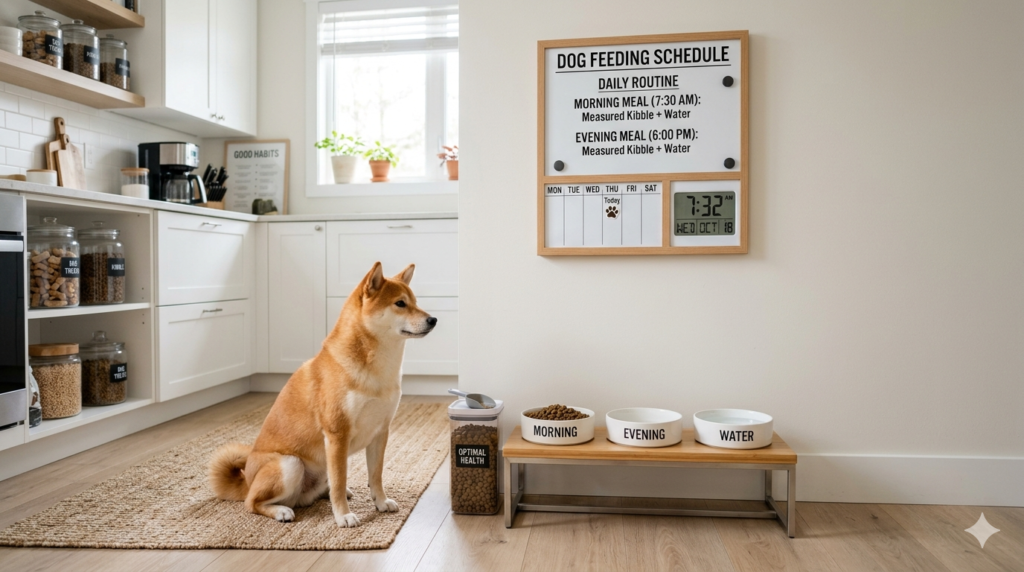
Most puppies do well with a consistent routine:
- Up to ~3–4 months: usually 3–4 meals/day
- ~4–6 months: typically 3 meals/day
- ~6–12 months: often 2–3 meals/day, gradually trending toward 2
Consistency helps digestion. I’ve watched households accidentally train stomach upset by constantly changing meal times, swapping foods, and doubling treats all in the same week.
Treats:
Treats are great for bonding and training, but they can quietly wreck calorie math. For growing puppies, try to keep treats to a small fraction of daily intake. When training, I often suggest using the food itself as training “crumbs” or tiny bites from the measured meal.
Transition foods slowly like you’re protecting their gut
Changing diets is one of the most common reasons for diarrhea or soft stools. If you switch foods, do it gradually over about 7–10 days:
- Start with ~25% new food mixed with 75% old
- Then 50/50
- Then 75/25
- Finish with 100% new
If your puppy is already sensitive, slow down further. Mild changes are normal; persistent vomiting, bloody stool, or lethargy is not something to “wait out.”
Supplements: useful sometimes, harmful when guessed
Many people assume supplements are part of the best nutrition plan. Sometimes they are sometimes they’re exactly what you don’t need.
Common supplement pitfalls:
- Over-supplementing calcium/phosphorus
- Adding multiple products at once (making it impossible to know what helped—or caused problems)
- Relying on joint powders without checking overall diet first
Generally safer approach:
- Use a complete puppy food as the baseline.
- Ask your vet before adding supplements.
- If a puppy has itchiness, coat issues, or digestion problems, start by reviewing diet quality and feeding routine not immediately adding fish oil, probiotics, or other add-ons.
Monitor growth with real feedback, not vibes
Weight checks matter. But body condition and stool quality matter just as much.
Track:
- Weekly weight (same scale, same time of day if possible)
- Stool firmness (a formed, consistent stool is a good sign)
- Energy and play
- Skin and coat condition
- How the puppy behaves after meals
If you’re seeing repeated soft stool after a particular food, that’s data. It doesn’t mean you failed—it means you can adjust.
A balanced “healthy growth” dog nutrition plan template (practical version)
Here’s a simple plan I often recommend as a starting point:
- Choose a complete and balanced puppy food appropriate for the dog’s size category (regular vs. large/giant).
- Feed 3–4 meals/day initially, then taper to 2 meals by adulthood timing.
- Start with the label feeding guide, then adjust based on body condition.
- Keep treats measured and limit extras (especially table scraps).
- Transition any new food over 7–10 days.
- Add water freely and ensure fresh water daily.
- Reassess every 2–4 weeks, especially between 3 and 6 months.
This isn’t glamorous, but it works. Healthy growth is consistency plus small corrections.
FAQs
Q: What is the best food for a growing puppy?
A: A complete and balanced puppy diet from a reputable brand, ideally matched to your puppy’s size category (regular vs. large/giant), is the safest best starting point.
Q: How do I know if my puppy is getting the right amount of food?
A: Check body condition: ribs should be feelable with light pressure, the waist should be visible from above, and stool should be formed not runny.
Q: Should I give supplements for puppy growth?
A: Usually, no if you’re feeding a quality complete puppy food. Ask your vet before adding calcium, joint supplements, or anything that could disrupt nutrient balance.
Q: Can I switch from puppy food to adult food early?
A: It depends on breed and growth rate. For many dogs, early switching can mean insufficient nutrition during critical growth. Follow breed guidance and your vet’s recommendations.
Q: Why is my puppy’s stool soft after changing food?
A: Most often it’s too-fast transition, overfeeding, or the new diet not agreeing with their digestion. Transition gradually and monitor severity persistent or bloody stool needs a vet.