
An active dog is a joy to live with until that energy has nowhere to go. Then it becomes chewed chair legs, barking at every passing leaf, digging in the yard, or pacing the hallway at 9 p.m. Most high-energy dogs are not bad dogs. They are under-exercised, under-stimulated, or both. A good dog exercise routine is not just about tiring your dog out.
It should build fitness, protect joints, support mental health, and fit realistically into daily life. Whether you live with a Border Collie, Labrador Retriever, German Shepherd, Vizsla, Australian Shepherd, Husky, or an energetic mixed breed, the right daily exercise plan can make life calmer for everyone.
How Much Exercise Do Active Dogs Really Need?
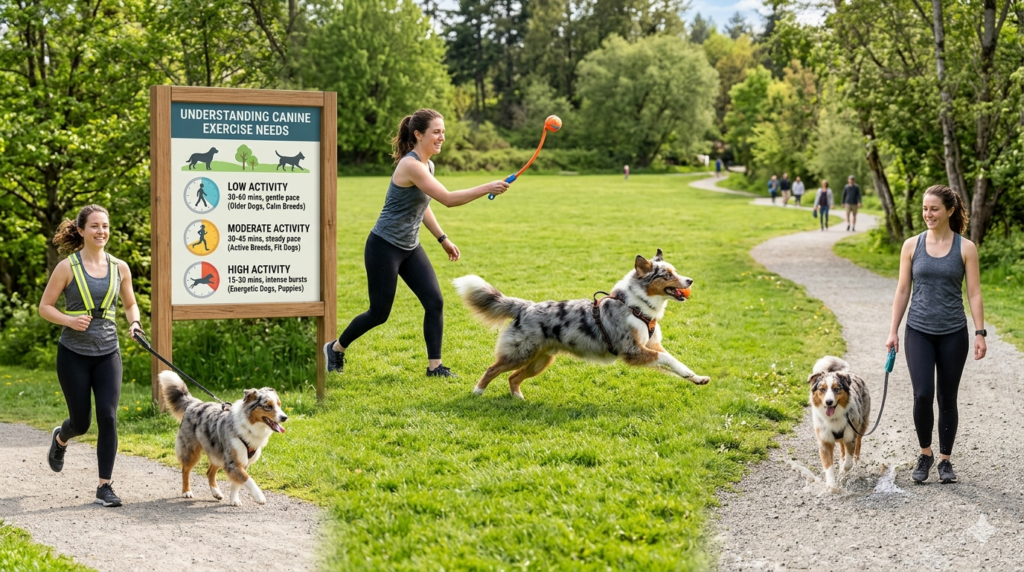
Most healthy adult dogs need at least 30 to 60 minutes of physical activity daily. Active breeds often need 90 minutes to 2 hours, sometimes more, depending on age, temperament, training level, and health. But more is not always better. Repetitive ball throwing for an hour may exhaust a dog, but it can also strain shoulders, wrists, knees, and hips. A balanced routine mixes:
- Walking
- Running or hiking
- Play
- Training
- Scent work
- Rest and recovery
The goal is not to create an endurance athlete who needs three hours of activity just to settle. The goal is a dog who is physically satisfied and mentally content.
Start With a Morning Energy Release
For active dogs, the morning routine sets the tone for the entire day. A quick five-minute potty walk usually is not enough.
A strong morning exercise session might look like this:
10 minutes: Warm-up walk at an easy pace
20 to 30 minutes: Brisk walk, jog, off-leash run in a safe area, or structured fetch
5 to 10 minutes: Basic obedience or impulse-control training
5 minutes: Cool-down walk
This combination works well because it gives the dog movement first, then asks for focus. Many owners make the mistake of expecting perfect obedience before the dog has burned off any energy. For a young Labrador or Shepherd, that is like asking a child to sit quietly after drinking a milkshake and seeing a playground.
If your dog pulls heavily on leash, use the walk as training rather than a battle. Stop when the leash tightens, reward when your dog checks in, and change direction often. Mental effort during a walk can be just as tiring as extra mileage.
Midday Mental Stimulation Matters
Not every dog can get a long midday outing, especially when owners work full-time. But active dogs need something to break up the day.
A midday routine may include:
- A 15-minute sniff walk
- Puzzle feeders
- Frozen stuffed toys
- Scatter feeding in the yard
- Short obedience drills
- A dog walker visit
- Safe dog daycare, if the dog enjoys it
Sniffing is underrated exercise. A slow walk where your dog investigates grass, trees, fence lines, and lamp posts can be more satisfying than a fast march around the block. Dogs read the world through scent. For high-energy dogs, scent work lowers arousal and gives the brain a job.
One simple option is the find it game. Toss a few pieces of kibble into the grass and let your dog search. It looks easy, but nose work is surprisingly tiring. It is also gentle on the body, which makes it useful on rainy days or recovery days.
Evening Exercise Should Calm, Not Overstimulate
Many active dogs get their wildest burst of energy in the evening. This is when owners often reach for the tennis ball and start an intense game of fetch. That can help, but it can also leave some dogs more wired than before. A better evening dog exercise routine should include both movement and decompression.
Try this structure:
20 to 40 minutes: Walk, hike, jog, or play session
10 minutes: Training, tricks, or scent games
5 minutes: Calm settling exercise, chewing, or gentle massage
If your dog struggles to relax at night, teach a place command or mat settle. After exercise, give a long-lasting chew or stuffed food toy. Chewing is naturally calming for many dogs and helps shift them from “go mode” into rest.
A Weekly Routine for Active Dogs
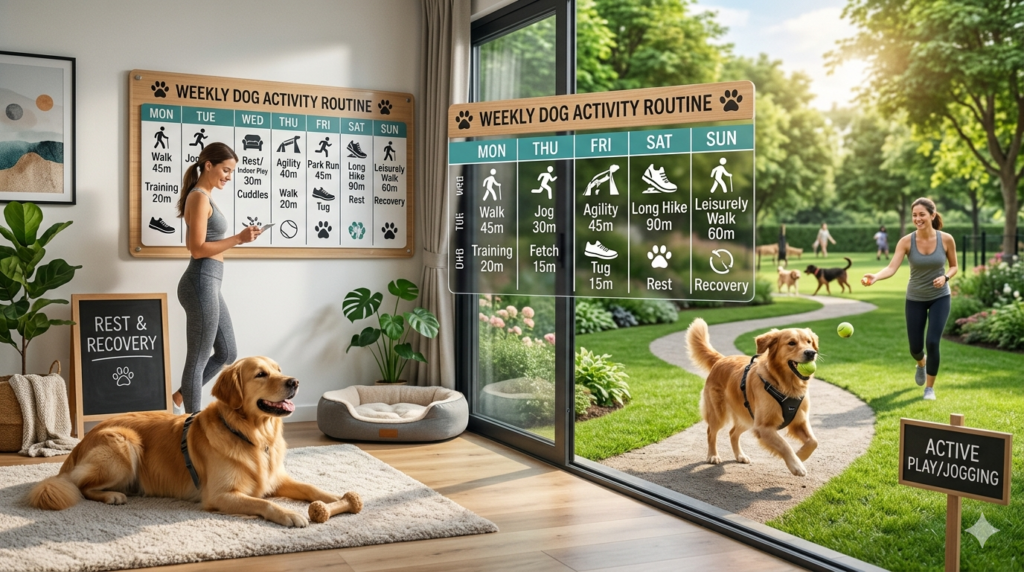
Daily exercise matters, but weekly variety prevents boredom and overuse injuries. Here is a realistic weekly plan for a healthy adult active dog:
Monday: Brisk walk plus obedience training
Tuesday: Fetch with breaks, followed by sniff work
Wednesday: Longer hike or trail walk
Thursday: Light day with puzzle toys and a relaxed walk
Friday: Jogging, bikejoring, or agility-style backyard games
Saturday: Adventure day—beach, woods, park, or long urban walk
Sunday: Recovery walk and enrichment feeding
Rest days are not lazy days. They are part of fitness. Dogs, like people, need recovery time for muscles, joints, and the nervous system. A dog that never gets rest may become more anxious, more reactive, and more prone to injury.
Match the Exercise to the Dog
Breed matters, but it is not the whole story. I have seen small terriers outlast big retrievers, and I have known large dogs who would rather sniff one bush for ten minutes than run a mile.
Consider your dog’s:
- Age
- Breed type
- Body condition
- Joint health
- Heat tolerance
- Training level
- Personality
Puppies should not do forced long-distance running. Their growth plates are still developing, and too much repetitive impact can cause problems later. Senior dogs may still love exercise, but they often need shorter, more frequent outings and softer surfaces.
Brachycephalic breeds, such as Bulldogs, Pugs, and French Bulldogs, need extra caution in heat and humidity. Even if they seem enthusiastic, they can overheat quickly.
Signs Your Dog Needs More Exercise
A dog may need more activity or enrichment if you notice:
- Restlessness
- Destructive chewing
- Excessive barking
- Digging
- Jumping on people
- Pulling hard on walks
- Attention-seeking behavior
- Difficulty settling indoors
However, behavior problems are not always caused by lack of exercise. Pain, anxiety, poor sleep, diet, or inconsistent training can also play a role. If a dog suddenly becomes restless or destructive, a veterinary check is a smart first step.
Signs Your Dog Is Getting Too Much
Active dogs often hide discomfort because they love movement. Watch for:
- Limping
- Stiffness after rest
- Reluctance to jump or climb stairs
- Excessive panting
- Lagging behind
- Cracked paw pads
- Irritability
- Sleeping much more than usual
High-drive dogs may keep chasing a ball even when their body is done. Owners have to be the responsible ones. Rotate activities, use warm-ups and cool-downs, and avoid high-impact exercise on slippery floors or hard pavement.
Weather, Safety, and Common-Sense Rules
Modern dog ownership often means exercising around busy roads, crowded parks, hot sidewalks, and unpredictable weather. Safety matters. In warm weather, walk early or late. Test pavement with the back of your hand; if it is too hot for your skin, it is too hot for paws. Bring water on longer outings. In cold weather, watch for ice buildup between toes and consider a coat for lean, short-haired breeds. For off-leash exercise, only use secure areas unless your dog has reliable recall. A GPS collar can be helpful, but it does not replace training. Also, keep identification tags current.
The Best Routine Is the One You Can Maintain
A perfect routine on paper is useless if it does not fit your life. Most active dogs do best with consistency, not occasional heroic effort. Two solid walks, a few short training games, and thoughtful enrichment every day will beat one exhausting weekend hike followed by five boring days. A well-exercised dog is easier to train, more relaxed at home, and usually healthier over the long term. The secret is balance: move the body, engage the brain, protect the joints, and allow proper rest. Active dogs do not just need to run. They need a life that gives them purpose.
FAQs
Q: How long should I exercise my active dog each day?
Most active adult dogs need 60 to 120 minutes of daily exercise, split into two or more sessions.
Q: Is walking enough for a high-energy dog?
A: Sometimes, but many active dogs also need training, play, scent work, or off-leash running in safe areas.
Q: Can I run with my dog every day?
A: Healthy adult dogs can often run regularly, but daily running may be too much for some. Build slowly and include rest days.
Q: What is the best exercise for active dogs?
A mix of brisk walking, controlled running, fetch, hiking, agility games, and mental enrichment is usually best.
Q: How do I tire out my dog indoors?
A: Use puzzle toys, hide-and-seek, obedience drills, tug, scent games, and stuffed food toys.
Q: Should puppies follow the same routine?
A: No. Puppies need shorter, gentler play sessions and should avoid forced long-distance running or repetitive jumping.
Q: How do I know if my dog is over exercised?
A: Watch for limping, stiffness, excessive panting, reluctance to move, irritability, or unusual fatigue.
Q: Do active dogs need rest days?
A: Yes. Rest days help prevent injuries and support emotional balance, especially for intense working breeds.