
I’ve driven cross-country three times with my two labs. The first trip was, frankly, a disaster. One dog threw up on the back seat somewhere outside Amarillo, the other wouldn’t stop pacing, and I pulled over about fourteen times in a single afternoon. By the third trip, though, we had it down to a science and I learned most of what I know the hard way.
Whether you’re heading to the vet across town or embarking on a road trip with your furry co-pilot, traveling safely with pets in the car takes more planning than most people realize. Here’s what actually matters.
Restraint Isn’t Optional It’s Essential
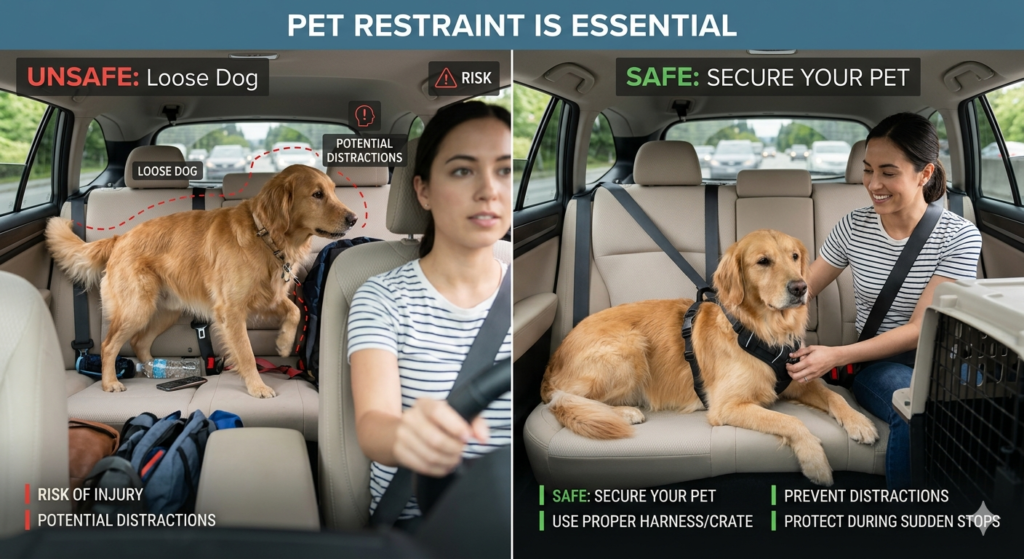
Let’s get the uncomfortable truth out of the way first. An unrestrained pet in a moving vehicle is a projectile in a crash. A 60-pound dog traveling at 35 mph generates roughly 2,700 pounds of force in a sudden stop. That’s enough to seriously injure or kill both the pet and a human passenger.
I know plenty of people who let their dogs ride shotgun with their head out the window. It looks adorable on Instagram. But it’s genuinely dangerous.
Your best options for restraint include:
- Crash-tested harnesses that clip into the seatbelt system. Look for ones certified by the Center for Pet Safety (CPS). Not all harnesses on the market have actually been crash-tested, so don’t just grab the cheapest one at the pet store.
- Travel crates or kennels secured in the cargo area or back seat. For smaller dogs and cats, a well-ventilated, hard-sided carrier is often the safest bet.
- Vehicle pet barriers that section off the cargo area. These won’t protect your pet in a rollover, but they prevent animals from climbing into the front seat and distracting the driver.
My personal setup? A Sleepypod Clickit harness for my older lab and a secured crate for my younger one, who’s calmer in an enclosed space. Every dog is different.
Start With Short Trips
If your pet isn’t used to riding in the car, don’t plan a six-hour drive as their introduction. Start small. Take them on five-minute trips to somewhere pleasant a park, a friend’s house, anywhere that isn’t the vet. Build a positive association with the car gradually.
I fostered a rescue once who trembled and drooled the moment she saw my SUV. Within three weeks of short, treat-filled practice runs, she was hopping in voluntarily. Patience matters more than any product you can buy.
Motion Sickness Is More Common Than You Think
Puppies are especially prone to car sickness because their inner ear structures aren’t fully developed. But adult pets can struggle too. Signs include excessive drooling, yawning, whining, or vomiting.
A few things that help:
- Skip the meal before travel. Feed your pet at least two to three hours before departure.
- Keep the car cool and crack a window slightly for fresh air circulation.
- Face them forward if possible. Just like humans, looking sideways or backward can worsen nausea.
- For chronic cases, your vet can prescribe medications like Cerenia, which is specifically designed for motion sickness in dogs. Over-the-counter options like Dramamine sometimes work, but always check with your vet on dosage first.
Never, Ever Leave a Pet in a Parked Car
This shouldn’t need saying in 2025, but it still happens far too often. On a 75°F day, the interior of a car can reach 100°F within ten minutes. At 90°F outside? You’re looking at potentially fatal temperatures inside the vehicle in under five minutes. Cracking the windows doesn’t fix this. It barely makes a difference.
If you’re traveling and need to make a stop where pets aren’t allowed inside, plan ahead. Bring a second person who can stay with the animal, or choose pet-friendly stops. Apps like BringFido can help you locate restaurants, hotels, and rest areas that welcome animals.
Pack a Pet Travel Kit
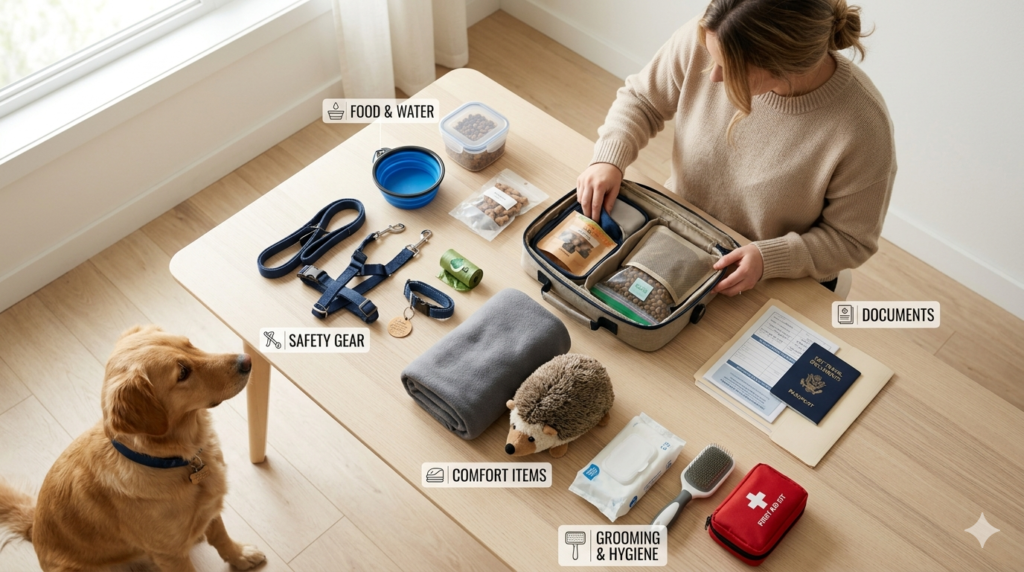
Over the years I’ve refined my packing list, and these are the non-negotiables:
- Water and a collapsible bowl. Dehydration sneaks up on pets faster than you’d expect.
- Poop bags and paper towels. Accidents happen. Be ready.
- A recent photo of your pet on your phone, in case they get lost at a rest stop.
- Vaccination records and any medications.
- Their favorite blanket or toy. Familiar scents reduce anxiety significantly.
- A leash that’s always within reach not buried in the trunk.
Plan Your Stops
For drives longer than two hours, stop every couple of hours to let your pet stretch, relieve themselves, and drink water. I usually sync my coffee breaks with their potty breaks. It works out naturally.
When you stop, always leash your pet before opening the car door. Even the most well-trained dog can bolt in an unfamiliar environment when startled by a passing truck or another animal.
Cats Need Special Consideration
Most of this article skews toward dogs because they’re the more common car travelers, but cats deserve mention. Cats generally hate car travel, and loose cats in a vehicle are a recipe for chaos they’ll wedge themselves under the brake pedal if given the chance.
Keep cats in a secure carrier at all times. Cover it with a light cloth to reduce visual stimulation. And consider a calming pheromone spray like Feliway on the carrier lining about 15 minutes before travel. It won’t sedate them, but it takes the edge off for many cats.
The Bottom Line
Traveling with pets doesn’t have to be stressful. The key is preparation, proper restraint, and knowing your individual animal’s needs and limits. Every pet is different. What works for my calm older lab would be completely wrong for a nervous rescue or an anxious cat. Pay attention to your pet’s signals, invest in safety equipment that’s actually been tested, and build up their comfort level gradually. The road is a lot more enjoyable when everyone in the car two-legged and four-legged arrives safely.
FAQs
Q: Can I let my dog ride in the truck bed?
A: No. It’s dangerous and illegal in many states. Dogs can be thrown from the vehicle during sudden stops or turns.
Q: What’s the safest spot in the car for a pet?
A: The back seat, secured with a crash-tested harness or in a properly anchored crate.
Q: How do I calm an anxious pet during car rides?
A: Try short practice trips, familiar-smelling blankets, calming supplements, or consult your vet about anti-anxiety medication for longer journeys.
Q: Is it safe to give my dog Benadryl for car travel?
A: Some vets recommend it for mild anxiety, but dosage depends on weight and health conditions. Always consult your vet first.
Q: How often should I stop on long road trips with a pet?
A: Every two to three hours for water, bathroom breaks, and a short walk.
Q: Do pets need seatbelts by law?
A: Laws vary by state and country. Several U.S. states have distracted driving laws that effectively require pet restraint. Check local regulations before traveling.