
Let’s be honest. As a devoted cat owner for over two decades, and after volunteering at shelters, I’ve seen the glazed-over look in a bored cat’s eyes. That sleek predator, whose ancestors roamed savannas and forests, is now staring at a blank wall or sleeping for 18 hours straight out of sheer monotony. The rise of the exclusively indoor cat is a triumph for safety and wildlife preservation, but it comes with a silent responsibility: we have to become their entertainment directors. It’s not enough to just provide food, water, and a clean litter box. A bored cat can become a stressed, destructive, or overweight cat.
Creating a stimulating environment isn’t about buying the most expensive toy on the market (though some are great). It’s about understanding instinct and making small, consistent efforts. Through trial, error, and a lot of observation, I’ve found that the most successful activities tap into a cat’s core drives: hunting, climbing, scratching, and problem-solving.
The Hunt is On: Simulating the Predatory Sequence
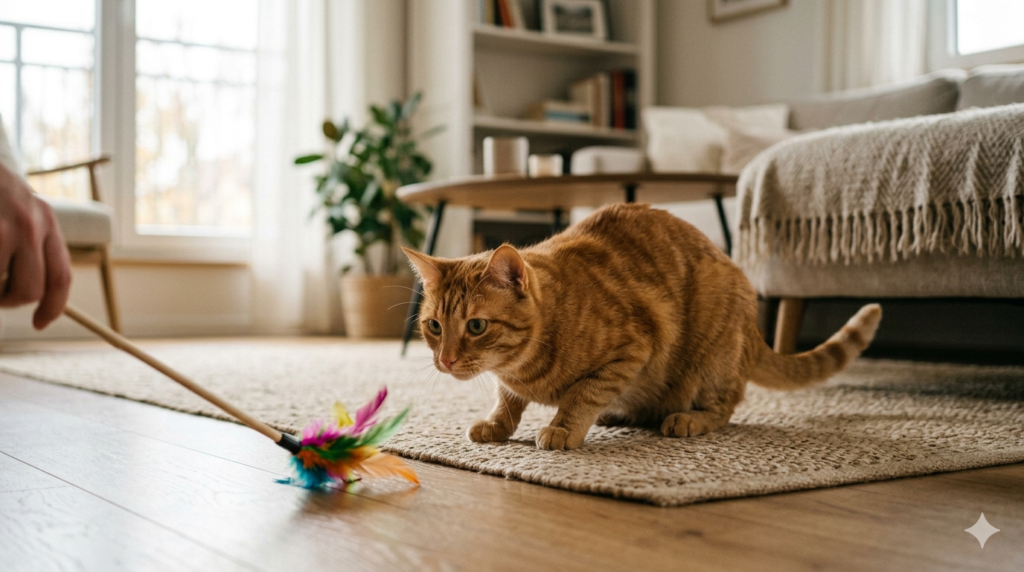
A cat’s life in the wild is a cycle of hunt, catch, kill, eat, groom, sleep. Our job is to replicate that first, crucial part. The classic feather wand is a staple for a reason. But the magic isn’t just in waving it around. It’s in the mimicry. Move the toy like prey a fluttering bird, a scurrying mouse. Hide it behind furniture. Let it go still, then dart away. The goal is the pounce, the catch. I always end a play session by letting my cat, Leo, capture the toy and immediately follow up with a small treat or his meal. This completes the sequence and leaves him satisfied, not frustrated.
One of the most effective toys I’ve ever used costs nothing: a crumpled-up paper ball. The sound it makes skittering across the hardwood is irresistible. But remember, variety is key. Rotate toys every few days to keep the novelty alive. That sparkle ball they ignored last month might become their favorite thing next week.
Vertical Territory: Thinking in Three Dimensions
Cats don’t just live on the floor. They crave vertical space. It gives them security, a vantage point, and a great workout. If you don’t have a sturdy cat tree, you’re missing a huge opportunity. Place it near a window to create a cat TV with views of birds and squirrels. But think beyond the cat tree. I installed a few floating shelves in a corner, creating a cat superhighway from the floor up to a high bookshelf. Leo uses it daily.
The confidence boost he got from mastering the route was palpable. Window perches are another brilliant investment. For added enrichment, consider a bird feeder placed outside that window. Just be prepared for some excited chattering.
The Power of the Puzzle (and the Cardboard Box)
Mental stimulation is just as tiring as physical play, and it prevents cognitive decline in older cats. Puzzle feeders are a game-changer. Instead of dumping kibble in a bowl, make them work for it. Start with simple ones a muffin tin with kibble in the cups and tennis balls on top. As they master it, graduate to more complex sliders and treat balls. It turns mealtime into a engaging 20-minute job.
And never, ever underestimate the allure of a simple cardboard box. It’s a fortress, a hiding spot, and a bed all in one. Cut some holes in it for extra peek-a-boo potential. I’ve bought fancy cat beds that gather dust while a Chewy shipping box becomes the favorite spot for weeks. Similarly, a crinkly paper bag (with handles cut off for safety) provides endless rustling fun.
Scratching: The Non-Negotiable Activity
Scratching isn’t just about sharpening claws; it’s a territorial marking behavior and a full-body stretch. Providing appealing scratching surfaces saves your furniture and keeps your cat happy. The key is offering variety: a tall, sturdy sisal post for full vertical stretches, a horizontal cardboard scratcher, and maybe a angled one. Sprinkle them with catnip to attract your cat. Place them in social areas, like near where you relax, because cats often scratch to mark their family group’s space.
Real Talk: Limitations and What Doesn’t Work
Not every activity is a hit. I’ve learned that the hard way. My friend’s cat is obsessed with the laser pointer, but I’ve stopped using one with Leo. The frustration of never being able to catch the elusive red dot was making him anxious. If you do use one, always end the session by leading the dot to a physical toy or treat he can finally catch. Some cats could not care less about puzzle feeders.
If your cat gets frustrated and walks away, you’ve made it too hard. Scale it back. The goal is engagement, not stress. Also, a word on solo toys. Battery-operated moving toys can be great for when you’re not home, but they’re no substitute for interactive play with you. That bonding time is crucial for your relationship and their emotional health.
The Daily Routine That Changes Everything
The most profound change for us came from consistency. Just 10-15 minutes of vigorous interactive play twice a day morning and evening can drastically reduce behavioral issues like nighttime zombie’s or aggression. It aligns with their natural crepuscular (dawn and dusk) activity peaks. Think of yourself as your cat’s personal life enrichment coach.
You’re not just keeping them busy; you’re honoring their nature. By creating a dynamic, engaging indoor world, you’re giving your cat a truly fulfilling life, full of the pounce, the climb, and the satisfied curl-up that follows a hunt well executed. And there’s nothing more rewarding than seeing that contented slow-blink from a happy, stimulated cat.
FAQs
Q: How much playtime does an indoor cat need?
A: Aim for at least two 10-15 minute sessions of active, interactive play daily. Kittens and high-energy breeds may need more. Consistency is more important than duration.
Q: My cat loses interest in toys quickly. What can I do?
A: Rotate toys! Keep a stash and only leave 2-3 out at a time, swapping them every few days. Also, try different types of prey: some cats prefer ground-based toys (like mice), others love aerial ones (like birds).
Q: Are laser pointers bad for cats?
A: They can be if overused. The inability to physically catch the light can cause frustration or obsessive behavior. If you use one, always finish the play session by leading the laser to a treat or toy they can actually pounce on.
Q: How do I introduce a puzzle feeder to my cat?
A: Start ridiculously easy. Use a toilet paper roll with the ends folded in and treats inside, or a muffin tin. Let them succeed immediately. Gradually increase difficulty only when they show confidence.
Q: Can I train my cat to do tricks as indoor enrichment?
A: Absolutely! Clicker training is fantastic mental stimulation. Start with simple things like sit or touch (touching your finger with their nose). Keep sessions very short (2-3 minutes) and always end on a positive note.