
Choosing a pet carrier seems simple until you’re standing in the pet store aisle, overwhelmed by a wall of options, or frantically searching online the night before a trip. I’ve been there more than once. With two cats and a small dog who’s logged more airline miles than some people, I’ve learned through trial, error, and one memorable airport meltdown (the dog’s, not mine) that the right carrier is a non-negotiable piece of gear. It’s not just a box with holes; it’s your pet’s mobile den, their safe space, and your ticket to stress-free travel or vet visits.
Think of it this way: you wouldn’t buy shoes without knowing your size, and you shouldn’t buy a carrier without considering your pet’s unique needs and your lifestyle. This pet carrier buying guide is born from those real experiences the good purchases and the regrettable ones to help you make a choice that keeps everyone happy and safe.
Start With Your Pet: Size, Temperament, and Health

The first and most critical step is measuring your pet, but not just for length. I once bought a carrier that was long enough for my cat, Whiskers, but so low he couldn’t sit upright without crouching. He hated it. So, measure from the tip of the nose to the base of the tail, and from the floor to the top of the head or ears (whichever is higher). Your pet should be able to stand, turn around, and lie down comfortably. Add a few inches to each measurement for ideal sizing.
Beyond size, consider personality. My dog, Leo, is anxious. A carrier with too much mesh made him feel exposed. We switched to one with solid sides and a single mesh panel, and his travel anxiety decreased noticeably. For a curious, calm pet, a backpack-style carrier with a viewing bubble might be perfect. For seniors or pets with arthritis, a carrier with a low-entry point or a top-loading option is a lifesaver, reducing the need to lift them awkwardly.
The Big Three: Hard-Sided, Soft-Sided, and Backpack Carriers
Hard-sided carriers: (like the classic plastic Vary Kennel) are the tanks of the pet transport world. I use these for airline travel and for my cat who is a master escape artist. They’re durable, easy to clean, and provide excellent protection in a vehicle. The downside? They’re bulky, heavy, and offer less flexibility for storage. If you’re primarily driving to the vet or checking your pet as airline baggage, this is often the safest bet.
Soft-sided carriers: are the versatile all-rounders. They’re lightweight, often collapsible, and can fit under an airline seat (always check your specific airline’s current pet policy, as dimensions change). I have a Sherpa bag that’s been across the country twice. The key here is quality. Cheap ones have flimsy zippers and weak seams. Look for sturdy nylon or canvas, reinforced stitching, and a rigid frame that won’t collapse on your pet. Their main vulnerability is with chewers or scratchers.
Backpack and sling carriers: are for the adventurous pet parent. They’re fantastic for hikes, crowded farmers’ markets, or navigating city streets on foot. However, they’re only suitable for small, calm pets and for limited durations. Ventilation is crucial; I once saw a dog in a poorly ventilated backpack on a warm day looking dangerously overheated. Always prioritize your pet’s comfort over the convenience of having your hands free.
Safety Features You Can’t Ignore
This is where experience really kicks in. That bargain carrier might save you $30 now, but a failed zipper at a gas station could cost you a lost pet.
Zippers and locks: are the number one failure point. opt for carriers with self-locking zippers or carabiners to clip the pulls together. For car travel, the carrier must be seatbelt-compatible. Some have dedicated straps to thread the seatbelt through, securing it to the backseat. Never, ever put a carrier in the trunk or let it roam free in the car it becomes a deadly projectile in a crash.
Ventilation: is non-negotiable. More mesh means better airflow, but it can mean less privacy. A good balance is mesh on at least three sides. I learned to avoid carriers with ventilation only on the top; when placed under a seat or on your lap, those vents become useless.
Waterproofing and cleanability: are the unglamorous heroes. Look for a removable, washable liner. Accidents happen, especially under stress. A carrier with a leak-proof bottom containing the mess is worth its weight in gold.
The Real-World Test: Travel and Lifestyle
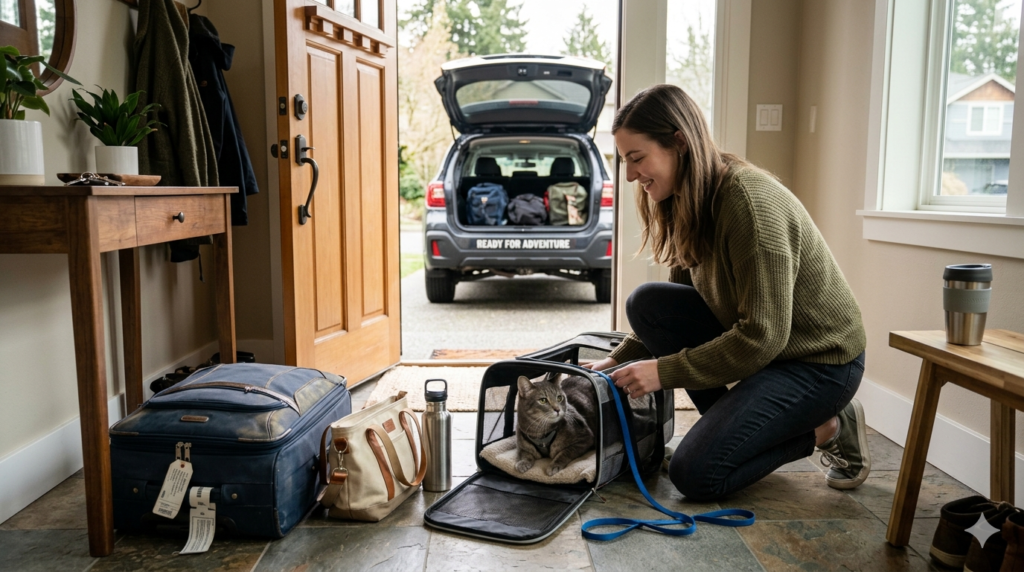
Your choice should mirror your life. If you fly frequently, an airline-approved pet carrier isn’t a suggestion it’s a mandate. Get the carrier well before your trip and make it part of the furniture. Leave it open in the living room with a favorite blanket inside. Feed your pet treats in it. This desensitization process turned the carrier from a torture device into a napping spot for my cat.
For vet visits, a top-loading carrier can make examinations much easier for the vet and less traumatic for your pet, as they don’t have to be pulled out head-first.
Final Thoughts: Invest in Peace of Mind
I’ve seen people spend a fortune on organic pet food but put their animal in a cheap, flimsy carrier. It’s a false economy. A good carrier is a one-time purchase for the life of your pet if chosen wisely. It’s about security, safety, and reducing stress for a creature that doesn’t understand what’s happening. Read reviews from other pet owners, but read them critically. Look for comments about durability after months of use, not just initial impressions.
And if you can, take your pet to a store to try different styles though I know that’s not always practical. Choosing the right pet carrier is an act of care. It’s you telling your pet, I’ve got you, whether you’re heading to the vet down the street or on a cross-country adventure. Take the time, measure twice, and invest in their comfort. You’ll both breathe easier for it.
FAQs
Q: How do I get my pet to like their carrier?
A: Make it a positive, permanent fixture. Leave it open in a common area with soft bedding and occasional treats inside. Feed meals near it, then in it. Never use it only for bad trips like the vet. Start with short, positive car rides to fun places.
Q: Can I use a dog carrier for my cat, or vice versa?
A: Generally, no. Dog carriers are often larger and less escape-proof. Cats are expert squeezers and need carriers with secure, often top-loading, latching systems. A determined cat can push through a weak zipper meant for a more docile small dog.
Q: Are backpack carriers safe for pets?
A: For short durations, with a calm, small pet, and in mild weather, they can be. They are not ideal for long periods as they restrict natural movement. Always ensure excellent ventilation and never leave your pet unattended in one.
Q: What’s the most important feature for airline travel?
A: Compliance with your specific airline’s size regulations. Check their website for the maximum dimensions for in-cabin travel before you buy. Also, ensure it has a waterproof bottom and secure, locking zippers.
Q: My pet had an accident in the carrier. How do I clean it?
A: Remove all bedding and wash it. For the carrier itself, use an enzymatic cleaner (like Nature’s Miracle) to fully break down odor-causing bacteria, which can attract them to soil it again. Avoid ammonia-based cleaners, as they smell like urine to animals.