
Let’s be honest: a barking dog is normal. A dog that barks at every single thing the mail truck, the ice maker, your neighbor sneezing three apartments down is exhausting. I’ve fostered over 40 rescue dogs in the last 12 years, from a silent senior Greyhound to a Beagle mix named Milo who could hear a leaf fall from two blocks away. I’ve also been the neighbor leaving the polite (then not-so-polite) note on the door. So I get both sides of it.
The good news? You don’t need a shock collar, you don’t need to yell QUIET! until you’re hoarse, and you definitely don’t need to get rid of your dog. You just need to stop treating all barking the same. Once you figure out why your dog is barking, stopping it gets about 10x easier.
First, Diagnose the Bark. Don’t Just Try to Stop It.
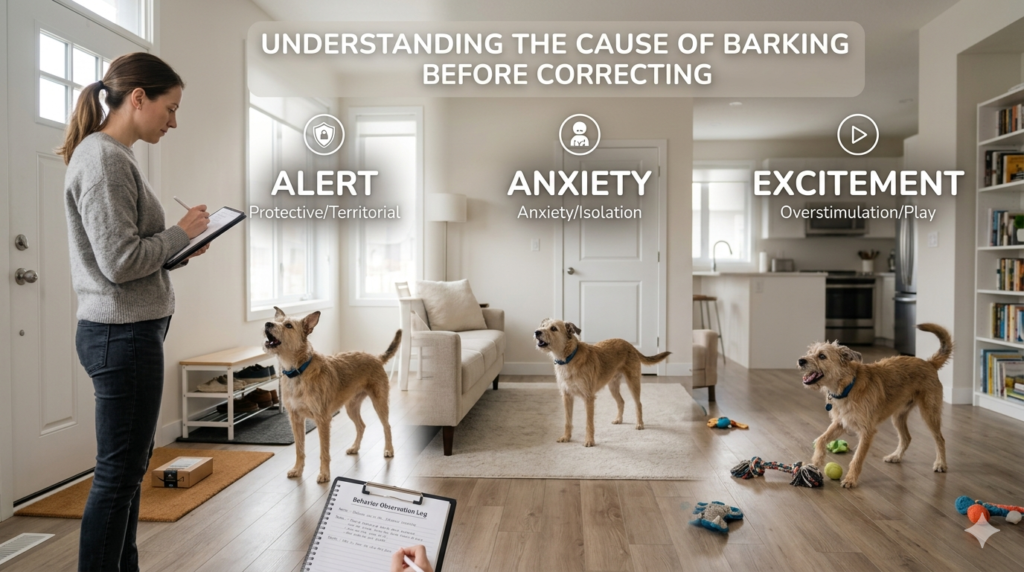
Barking is communication. Punishing it without understanding it is like taking the batteries out of a smoke alarm.
Most excessive barking falls into one of five buckets:
1. Territorial / Alert Barking: This is the someone is at my fence! bark. Stiff body, forward ears, barking at the window, the doorbell, people walking past. It’s self-rewarding the mailman always leaves, so in your dog’s mind, his barking worked.
2. Attention-Seeking / Demand Barking: Sharp, repetitive, usually right at you. You’re on a Zoom call and he starts barking at you for the ball. If you look, talk, or throw it, you just got trained.
3. Fear, Anxiety, or Reactivity: Often on leash. Lunging, barking at other dogs, strangers, skateboards. This isn’t aggressive, it’s usually get away from me!
4. Boredom / Frustration Barking: The backyard dog who barks at 2pm for an hour straight. Or the puppy in the crate. They’re under-exercised and understimulated.
5. Separation Anxiety Barking: This one is different. It’s howling, whining, and frantic barking within 5-30 minutes of you leaving. It’s panic, not misbehavior.
Spend two days. Literally write it down: time, trigger, what happened right before. You’ll see a pattern fast. Milo, my Beagle, was 90% territorial and 10% bored. We fixed both and his barking dropped by 80% in about three weeks.
Stop Doing the Things That Make It Worse
I made all these mistakes with my first dog, Lucy.
- Don’t yell no!: Your dog thinks you’re barking with them. You just joined the choir and made it more exciting.
- Don’t use shock, prong, or citronella collars as a first step: The American Veterinary Society of Animal Behavior (AVSAB) position is clear on this punishment suppresses the symptom but increases underlying stress and anxiety. I’ve seen dogs go from barkers to biters because the warning was punished away. There are humane ways first.
- Don’t be inconsistent: If barking at the window is cute on Saturday but gets him yelled at on Monday while you’re working, he’s confused. Dogs need consistent rules.
- Don’t give in to demand barking: This is the hardest one. If he barks for dinner and you feed him to shut him up, congratulations, you just taught a masterclass in how to bark for dinner.
The Training Plan That Actually Works
Forget a magic command. This is a three-part system: Manage, Meet Needs, Train.
1. MANAGE the environment first. You cannot train a dog who is practicing the bad behavior 50 times a day. Close the blinds. Put up frosted window film (a $15 lifesaver on Amazon). Use a white noise machine or box fan near the front door. If you work from home, keep your dog on a leash tethered to your desk or on a comfy bed away from the window during peak delivery hours. Management isn’t cheating it’s essential.
2. MEET the physical and mental needs. A tired dog is not always a quiet dog, but a bored dog is always a noisy dog. Most adult dogs need more than a 20-minute walk around the block. Add 15 minutes of sniffing (a sniffer ), a frozen Kong, a Topple stuffed with wet food, or a flirt pole session. For Milo, two puzzle feeders a day cut his afternoon “boredom bark” completely.
TRAIN an alternative teach Speak then Quiet.
This sounds backwards but it works. Get a treat he loves.
- Trigger a tiny bark (knock on the wall). Mark Yes! and treat. Say Speak. Do it 5 times.
- Now, wait for quiet. The second he pauses for one second after a bark, say Quiet, mark Yes! and shove a high-value treat in his face. The treat has to be better than the barking is fun think chicken, cheese, hot dog.
- Practice to 3-5 seconds of quiet, then 10.
- Now use it in real life. He barks at window. You calmly go over, say Thank you (I acknowledge the alert), then Quiet, lure him away with the treat to his place bed. Reward him for being quiet on the bed.
The key is you’re not just stopping barking, you’re teaching an incompatible behavior: you can’t bark with your mouth full and lying down. For leash reactivity or fear barking, you need counter-conditioning. This is where I tell people to get help. Distance is your friend. See a dog 50 feet away before your dog explodes, feed chicken continuously. Over weeks, you move closer. It’s slow, but a 2019 Lincoln University study showed it was far more effective long-term than correction-based methods.
When It’s Specific: Quick Fixes
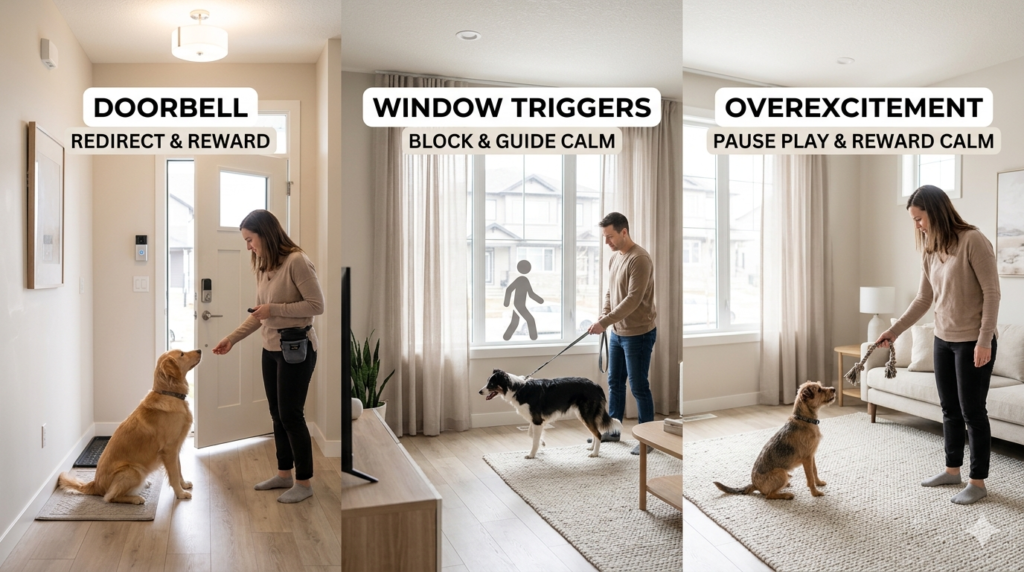
Dog barks at everything out the window? Management + “Thank You” protocol above. Don’t let them guard the window all day. It’s a job they love and it’s stressful.
Dog barks when you leave? That’s likely separation anxiety. This is NOT a training issue, it’s a panic disorder. No amount of quiet will fix it. Record him. If it starts immediately and is constant, talk to your vet and find a CSAT (Certified Separation Anxiety Trainer). Please don’t just get a bark collar for this.
Dog barks at night? Rule out medical first (older dogs with Canine Cognitive Dysfunction often sundown). Make sure he’s peed, has water, has a chew, and use a crate cover and white noise. Never reward a 3am bark by letting him on the bed if that’s not the rule.
Dog barks for attention? Become boring. Turn your back, cross your arms, stare at the ceiling. The second he is quiet for 2 seconds, turn, ask for a sit, and give attention. It will get worse for 2-3 days (an extinction burst) before it gets better. Stay strong.
A Realistic Timeline
You will not fix this in two days. A simple alert barker in a consistent home? You’ll see a 50% drop in 2 weeks. A fear-reactive or separation anxiety barker? Think months, not weeks. And some breeds are just vocal. I will never make a Sheltie, Husky, or Beagle completely silent. That’s unfair and unrealistic. The goal is control, not zero sound.
If you’re overwhelmed, or your dog is growling, lunging, or seems truly distressed, call a professional. Look for a vet behaviorist (DACVB) or a trainer certified by the CCPDT or IAABC who uses positive reinforcement. It’s cheaper than an eviction notice.
Excessive barking almost always means your dog is bored, worried, territorial, or has learned it works. Fix the underlying need, manage the trigger, and reward the quiet you want more of. It takes patience, but the quiet house on the other side is worth it.
FAQs
Q: How long does it take to stop excessive barking?
A: For demand or territorial barking, 2-4 weeks of consistent training. For anxiety or reactivity, 3-6 months with a professional plan is normal.
Q: Do bark collars work?
A: They can suppress barking temporarily, but they don’t address the cause. Shock and citronella collars are linked to increased fear and aggression by veterinary behaviorists. I don’t recommend them.
Q: Should I just ignore my dog when he barks?
A: Only for pure attention-seeking barking. Ignoring fear, territorial, or separation anxiety barking will make it worse. Identify the why first.
Q: Why does my dog bark at nothing?
A: He doesn’t. Dogs hear frequencies we don’t. It’s usually distant sirens, wildlife, pipes, or early signs of hearing loss or cognitive decline in seniors. Get a vet check if it’s new.
Q: Can you teach an old dog not to bark?
A: Absolutely. Old dogs learn beautifully. You may just need higher-value treats and a vet check to rule out pain first.
Q: Is my dog barking because he’s aggressive?
A: Not usually. Over 70% of aggressive barking on leash is frustration or fear-based reactivity. True aggression is quiet and stiff. Get an assessment if you’re unsure.